
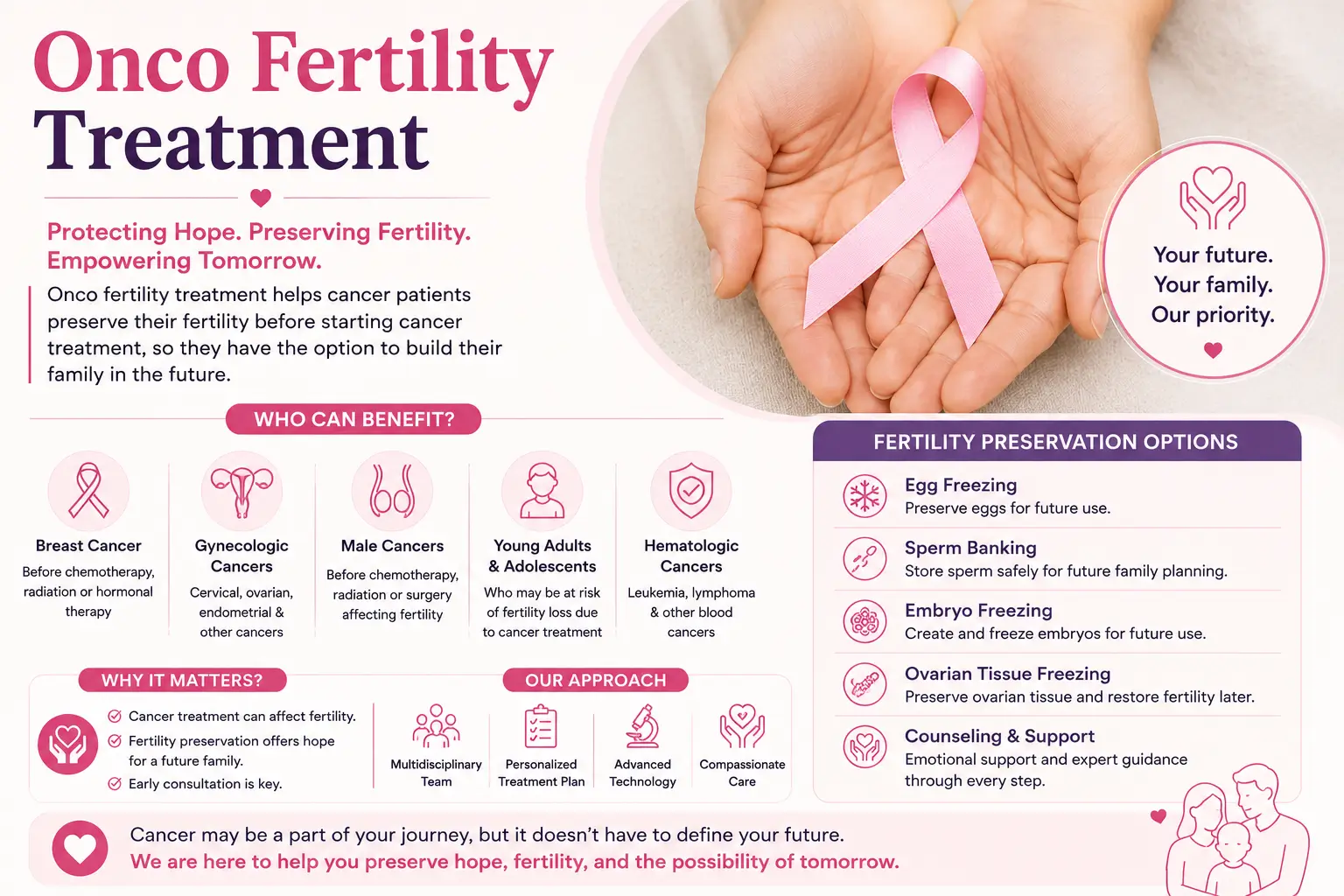
Oncofertility
A cancer diagnosis can change life in an instant. Along with concerns about treatment and recovery, many patients also worry about their future—especially their ability to have children after cancer treatment.
While advances in cancer care have improved survival rates, treatments such as chemotherapy, radiation therapy, and certain surgeries can affect fertility in both men and women. For individuals who hope to have children in the future, this can add another layer of emotional stress during an already difficult time.
The good news is that modern reproductive medicine offers solutions. Oncofertility combines oncology and fertility care to help cancer patients preserve their reproductive potential before starting treatment.
Dr. Shipra Singla provides personalized oncofertility counseling and fertility preservation options for patients diagnosed with cancer. By acting early, many individuals can protect their future family-building opportunities while focusing on their cancer treatment and recovery.
What Is Oncofertility?
Oncofertility is a specialized area of reproductive medicine that focuses on preserving fertility in patients diagnosed with cancer or other medical conditions requiring treatments that may affect reproductive health.
The goal is to preserve eggs, sperm, embryos, or reproductive tissue before cancer treatment begins, allowing patients the possibility of having biological children in the future.
Oncofertility is appropriate for:
- Women diagnosed with cancer
- Men diagnosed with cancer
- Adolescents and young adults facing fertility-threatening treatments
- Patients undergoing bone marrow transplantation
Early consultation is important because fertility preservation is often most effective before treatment starts.
Why Can Cancer Treatment Affect Fertility?
Many cancer treatments are designed to destroy rapidly dividing cells. Unfortunately, reproductive cells may also be affected during the process.
Depending on the type of treatment, fertility may be temporarily or permanently impacted.
Chemotherapy
Certain chemotherapy drugs can damage eggs in the ovaries or affect sperm production in the testes.
Potential effects include:
- Reduced ovarian reserve
- Premature menopause
- Decreased sperm count
- Long-term fertility challenges
Radiation Therapy
Radiation directed near the reproductive organs can affect fertility.
Possible effects include:
- Ovarian damage
- Uterine changes
- Reduced sperm production
- Hormonal disruption
Cancer Surgery
Some surgeries involving reproductive organs may impact fertility depending on the type and extent of the procedure.
Examples include surgeries involving:
- Ovaries
- Uterus
- Testes
- Reproductive structures
Because fertility risks vary based on the cancer diagnosis and treatment plan, early fertility counseling is strongly recommended.
Who Should Consider Oncofertility Services?
Fertility preservation should be discussed with any patient who may undergo treatment that could affect reproductive health.
You may benefit from oncofertility consultation if you:
- Have recently been diagnosed with cancer
- Are planning chemotherapy
- Are preparing for radiation therapy
- Require surgery involving reproductive organs
- Are undergoing bone marrow transplantation
- Want future family-building options after cancer treatment
- Have concerns about fertility preservation before medical treatment
Even if you're unsure whether you want children in the future, preserving fertility can help keep your options open.
Fertility Preservation Options for Women
Egg Freezing (Oocyte Cryopreservation)
Egg freezing is one of the most common fertility preservation methods for women.
Before cancer treatment begins:
- The ovaries are stimulated using fertility medications.
- Mature eggs are retrieved.
- Eggs are frozen and stored for future use.
When the patient is ready to pursue pregnancy later, the eggs can be thawed, fertilized through IVF, and transferred into the uterus.
Benefits of Egg Freezing
- Preserves future reproductive potential
- Suitable for women without a current partner
- Allows future IVF treatment
- Widely used and effective fertility preservation option
Embryo Freezing
Embryo freezing involves fertilizing retrieved eggs with sperm before freezing.
The resulting embryos are preserved and can be transferred in the future when pregnancy is desired.
This option may be suitable for:
- Married couples
- Couples planning future pregnancies
- Patients who wish to preserve embryos before treatment
Benefits of Embryo Freezing
- Established fertility preservation method
- Allows future embryo transfer
- Preserves reproductive potential before cancer treatment
Ovarian Tissue Freezing
In selected cases, ovarian tissue may be surgically removed and frozen before treatment.
The tissue may potentially be used in the future to restore reproductive function.
This option may be considered when cancer treatment must begin immediately and there is insufficient time for egg retrieval.
Fertility Preservation Options for Men
Sperm Freezing (Sperm Cryopreservation)
Sperm freezing is the most common fertility preservation option for men facing cancer treatment.
Before treatment begins:
- A semen sample is collected.
- The sperm is processed and frozen.
- Samples are stored for future fertility treatment.
Frozen sperm can later be used in:
- IUI
- IVF
- ICSI
Benefits of Sperm Freezing
- Simple and effective procedure
- Preserves future fertility options
- Can be completed quickly before treatment starts
- Supports future family-building goals
Surgical Sperm Retrieval
For men who are unable to provide a semen sample or have specific fertility challenges, surgical sperm retrieval may be considered.
Techniques such as:
- PESA
- TESA
- TESE
- Micro-TESE
may help obtain sperm for future fertility treatment.
How Does the Oncofertility Process Work?
Step 1: Fertility Consultation
Dr. Shipra Singla reviews:
- Cancer diagnosis
- Treatment timeline
- Reproductive goals
- Fertility risks associated with treatment
Step 2: Fertility Assessment
Testing may include:
- Hormone evaluation
- Ovarian reserve testing
- Ultrasound examinations
- Semen analysis
Step 3: Personalized Preservation Plan
A fertility preservation strategy is created based on:
- Age
- Medical condition
- Treatment urgency
- Future family-building goals
Step 4: Fertility Preservation Procedure
Eggs, embryos, sperm, or reproductive tissue are collected and preserved before cancer treatment begins.
Step 5: Future Family Building
When cancer treatment is complete and pregnancy is desired, the preserved reproductive material may be used in fertility treatment.
Why Timing Matters in Oncofertility
One of the most important aspects of fertility preservation is timing.
In many cases, fertility preservation must be completed before:
- Chemotherapy begins
- Radiation therapy starts
- Certain surgeries are performed
The earlier fertility preservation is discussed, the more options may be available.
This is why patients are encouraged to consult a fertility specialist as soon as possible after diagnosis.
Can Cancer Survivors Have Children After Treatment?
Yes. Many cancer survivors go on to build healthy families after treatment.
Fertility outcomes depend on several factors, including:
- Type of cancer
- Treatment received
- Age at treatment
- Fertility preservation methods used
- Overall reproductive health
While fertility cannot always be guaranteed, oncofertility services can significantly expand future family-building opportunities.
Dr. Shipra Singla's Approach to Oncofertility Care
A cancer diagnosis often requires making important decisions quickly. Dr. Shipra Singla believes that fertility preservation discussions should be compassionate, informative, and tailored to each patient's needs.
Her approach includes:
- Comprehensive fertility counseling
- Rapid fertility preservation planning
- Advanced egg freezing and embryo freezing techniques
- Sperm preservation services
- Personalized fertility care
- Collaboration with oncology teams
- Long-term reproductive planning
The goal is to help patients focus on cancer treatment today while preserving hope for tomorrow.
Frequently Asked Questions About Oncofertility
Should I delay cancer treatment for fertility preservation?
This depends on your diagnosis and treatment plan. Dr. Shipra Singla works closely with oncology teams to identify safe and appropriate fertility preservation options.
How quickly can fertility preservation be completed?
Many fertility preservation procedures can be initiated promptly after consultation to minimize delays in cancer treatment.
Can both men and women preserve fertility before cancer treatment?
Yes. Options are available for both male and female patients.
Is fertility preservation only for adults?
No. Certain fertility preservation options may be available for adolescents and young adults depending on their situation.
Can preserved eggs, embryos, or sperm be used years later?
Yes. Modern cryopreservation techniques allow reproductive material to be stored for many years.
Protect Your Future Fertility Before Cancer Treatment
A cancer diagnosis shouldn't take away your future family-building options. With timely fertility preservation and expert guidance, many patients can safeguard their reproductive potential before beginning treatment.
Schedule a consultation with Dr. Shipra Singla today to discuss oncofertility options, understand how cancer treatment may affect fertility, and create a personalized fertility preservation plan that protects your future possibilities.
While cancer treatment focuses on healing today, oncofertility helps preserve hope for the years ahead—because surviving cancer and building the family you've dreamed of can both be part of your journey.