
Hysteroscopy for Fertility Treatment
When you're trying to conceive, every part of the reproductive system plays an important role. While factors such as egg quality, sperm health, and ovulation are often discussed, the condition of the uterus is equally important for a successful pregnancy.
Even if fertilization occurs, an embryo needs a healthy uterine environment to implant and grow. Sometimes, hidden issues inside the uterus can interfere with implantation, contribute to recurrent miscarriages, or reduce the chances of IVF success.
This is where Hysteroscopy can be extremely valuable.
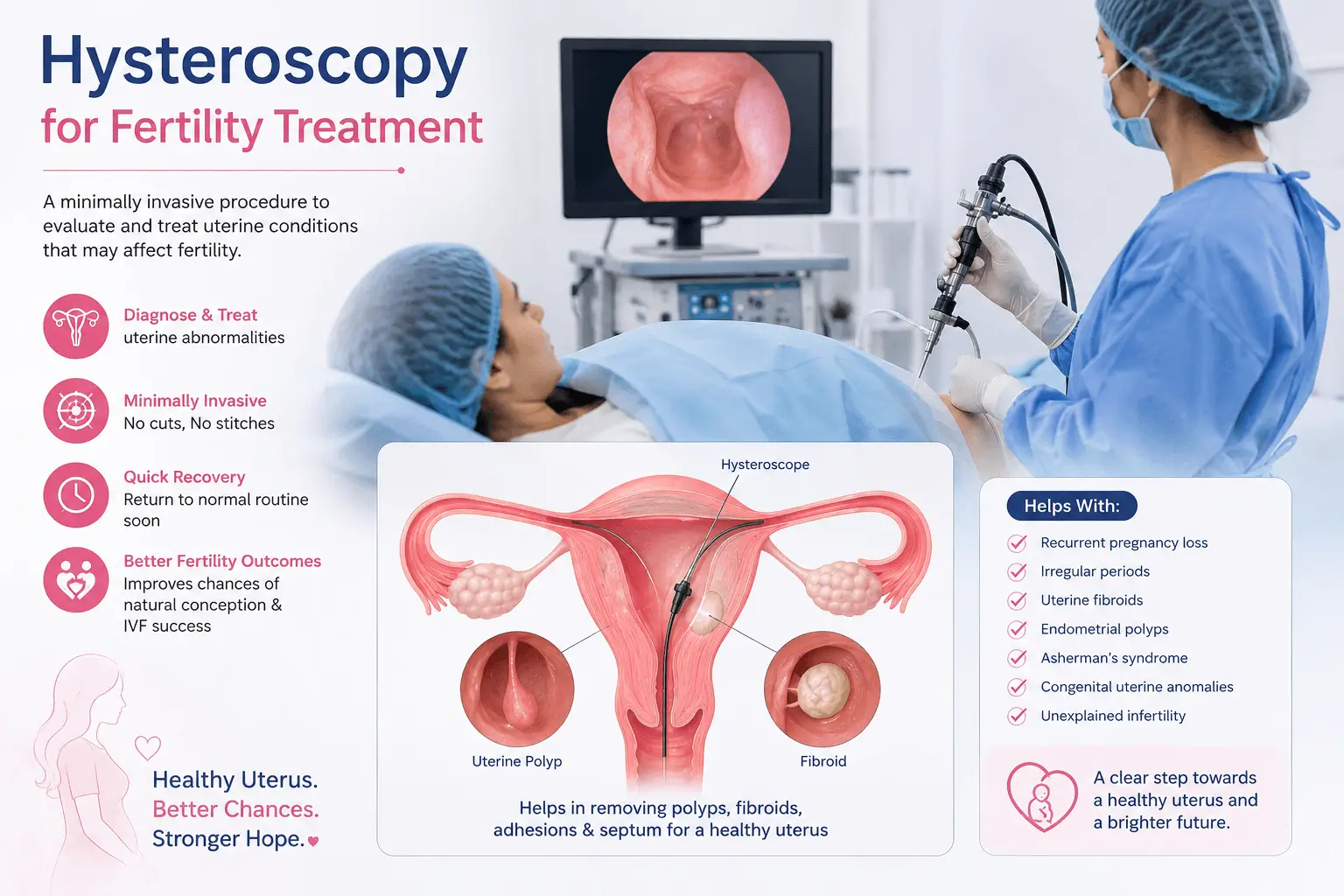
Hysteroscopy is a minimally invasive procedure done transvaginal that allows fertility specialists to examine the inside of the uterus and, when necessary, treat abnormalities that may be affecting fertility. It is considered one of the most effective diagnostic and therapeutic procedures in reproductive medicine.
Dr. Shipra Singla uses hysteroscopy as part of a comprehensive fertility evaluation and treatment plan to help identify and address uterine conditions that may impact natural conception, IUI, or IVF outcomes.
What Is Hysteroscopy?
Hysteroscopy is a procedure that allows a fertility specialist to directly view the inside of the uterus using a thin, lighted instrument called a hysteroscope.
The hysteroscope is gently inserted through the cervix into the uterus, providing a clear view of the uterine cavity on a monitor.
Unlike many surgical procedures, hysteroscopy does not require large incisions because it is performed through the natural opening of the cervix.
The procedure can be used for:
- Diagnosing uterine abnormalities
- Investigating infertility
- Evaluating recurrent miscarriage
- Assessing failed IVF cycles
- Treating certain uterine conditions during the same procedure
Why Is Hysteroscopy Important in Fertility Treatment?
A healthy uterus is essential for embryo implantation and pregnancy development.
Sometimes, abnormalities inside the uterine cavity may not be detected through routine ultrasound alone. Hysteroscopy allows direct visualization of the uterus, making it one of the most accurate methods for diagnosing uterine problems.
For women struggling with infertility, recurrent pregnancy loss, or repeated IVF failures, hysteroscopy may reveal conditions that can be treated to improve pregnancy outcomes.
When Does Dr. Shipra Singla Recommend Hysteroscopy?
Hysteroscopy may be recommended in several fertility-related situations, including:
Difficulty Conceiving
If pregnancy has not occurred despite regular attempts, evaluating the uterine cavity may help identify potential barriers to implantation.
Recurrent Miscarriage
Women who have experienced multiple pregnancy losses may benefit from hysteroscopic evaluation to identify uterine abnormalities.
Failed IVF Cycles
When high-quality embryos fail to implant, hysteroscopy may help detect hidden uterine conditions affecting implantation.
Abnormal Uterine Bleeding
Heavy, irregular, or unexplained bleeding may indicate structural abnormalities within the uterus.
Abnormal Ultrasound Findings
Hysteroscopy is often recommended when imaging studies suggest uterine polyps, fibroids, adhesions, or other abnormalities.
Diagnostic Hysteroscopy
What Is Diagnostic Hysteroscopy?
Diagnostic hysteroscopy is performed to examine the uterine cavity and identify abnormalities that may affect fertility.
The procedure allows direct evaluation of:
- Uterine shape
- Endometrial lining
- Fallopian tube openings
- Polyps
- Fibroids
- Scar tissue
- Congenital abnormalities
Because the uterus is viewed directly, hysteroscopy often provides more detailed information than imaging tests alone.
Conditions Diagnosed Through Hysteroscopy
Endometrial Polyps
Polyps are small growths that develop within the uterine lining.
These growths may interfere with embryo implantation and reduce fertility.
Uterine Fibroids
Fibroids that protrude into the uterine cavity can affect implantation and pregnancy outcomes.
Intrauterine Adhesions (Asherman's Syndrome)
Scar tissue inside the uterus may develop after infections, surgeries, or previous procedures.
Adhesions can reduce fertility and increase miscarriage risk.
Uterine Septum
A uterine septum is a congenital condition in which a wall of tissue divides part of the uterus.
This condition has been associated with recurrent miscarriage and fertility challenges.
Endometrial Abnormalities
Hysteroscopy allows direct assessment of the uterine lining, which is critical for embryo implantation.
Operative Hysteroscopy
What Is Operative Hysteroscopy?
One of the biggest advantages of hysteroscopy is that treatment can often be performed during the same procedure.
This is known as operative hysteroscopy.
Specialized instruments can be passed through the hysteroscope to remove or correct abnormalities without requiring major surgery.
Conditions Treated Through Operative Hysteroscopy
Hysteroscopic Polyp Removal
Endometrial polyps can be removed to create a healthier uterine environment for implantation.
Hysteroscopic Fibroid Removal
Submucosal fibroids affecting the uterine cavity may be removed to improve fertility and pregnancy outcomes.
Adhesion Removal
Scar tissue inside the uterus can be carefully removed to restore normal uterine anatomy.
Septum Correction
A uterine septum can often be corrected through hysteroscopic surgery, reducing miscarriage risk and improving reproductive outcomes.
How Does Hysteroscopy Help Improve Fertility?
Many fertility challenges are related to factors that affect embryo implantation.
By identifying and treating uterine abnormalities, hysteroscopy may help:
- Improve embryo implantation
- Increase chances of natural conception
- Support successful IVF outcomes
- Reduce miscarriage risk
- Create a healthier uterine environment
- Improve reproductive function
For some women, correcting a uterine issue can significantly improve fertility treatment success.
Hysteroscopy and IVF Success
Women undergoing IVF often ask whether hysteroscopy can improve treatment outcomes.
In selected patients, the answer may be yes.
Hysteroscopy may be particularly helpful for:
- Repeated IVF failures
- Recurrent implantation failure
- Abnormal ultrasound findings
- Suspected uterine abnormalities
- Recurrent miscarriage before IVF
By ensuring the uterine cavity is healthy and receptive, hysteroscopy may improve the chances of successful embryo implantation.
Dr. Shipra Singla may recommend hysteroscopy before IVF when clinically appropriate as part of a personalized fertility treatment plan.
What Happens During the Procedure?
Preparation
The procedure is typically scheduled at a specific time during the menstrual cycle for optimal visualization.
Uterine Examination
A hysteroscope is gently inserted through the cervix to examine the uterine cavity.
Treatment (If Needed)
If abnormalities are identified, treatment may often be performed immediately during the same procedure.
Recovery
Most patients recover quickly and can return to normal activities within a short period.
Recovery recommendations vary depending on the extent of treatment performed.
Benefits of Hysteroscopy
Accurate Diagnosis
Direct visualization provides detailed information about the uterine cavity.
Simultaneous Diagnosis and Treatment
Many uterine abnormalities can be diagnosed and corrected during the same procedure.
Faster Recovery
Most patients experience a relatively quick recovery.
Improved Fertility Outcomes
Treating uterine abnormalities may improve natural conception and assisted reproduction success rates.
Is Hysteroscopy Safe?
Hysteroscopy is considered a safe and widely used gynecological procedure when performed by experienced specialists.
Like any medical procedure, potential risks and benefits are discussed beforehand.
Dr. Shipra Singla carefully evaluates each patient's fertility history and medical condition before recommending hysteroscopy.
Dr. Shipra Singla's Approach to Fertility Evaluation
Successful fertility treatment starts with identifying the factors affecting conception.
Dr. Shipra Singla believes in a thorough, personalized approach that addresses all aspects of reproductive health—including uterine health.
Her approach includes:
- Comprehensive fertility assessment
- Advanced diagnostic evaluation
- Personalized treatment planning
- Evidence-based fertility care
- IVF and implantation support
- Recurrent miscarriage evaluation
- Compassionate patient care
Every recommendation is tailored to the patient's individual fertility goals and medical history.
Frequently Asked Questions About Hysteroscopy
Is hysteroscopy painful?
Most patients experience minimal discomfort. Depending on the procedure, local anesthesia, sedation, or anesthesia may be used.
How long does hysteroscopy take?
The procedure typically takes between 10 and 30 minutes, depending on type of treatment is performed.
Can hysteroscopy improve IVF success?
For patients with uterine abnormalities, hysteroscopy may help improve implantation and IVF outcomes.
How soon can I try to conceive after hysteroscopy?
This depends on the findings and type of treatment performed. Dr. Shipra Singla will provide individualized guidance.
Is hysteroscopy necessary before IVF?
Not for every patient. It is recommended when there is suspicion of uterine abnormalities, recurrent miscarriage, or previous failed IVF cycles.
Take the Next Step Toward a Successful Pregnancy
If you're experiencing infertility, recurrent miscarriages, failed IVF cycles, or have concerns about your uterine health, hysteroscopy may provide valuable answers and treatment opportunities.
Schedule a consultation with Dr. Shipra Singla today to discuss whether hysteroscopy is right for you. With advanced diagnostic expertise, personalized fertility care, and a focus on improving reproductive outcomes, she can help identify and address the factors that may be standing in the way of your pregnancy journey.
Sometimes, improving fertility starts with looking deeper. Hysteroscopy can help uncover hidden uterine conditions, create a healthier environment for implantation, and bring you one step closer to achieving your dream of parenthood.