
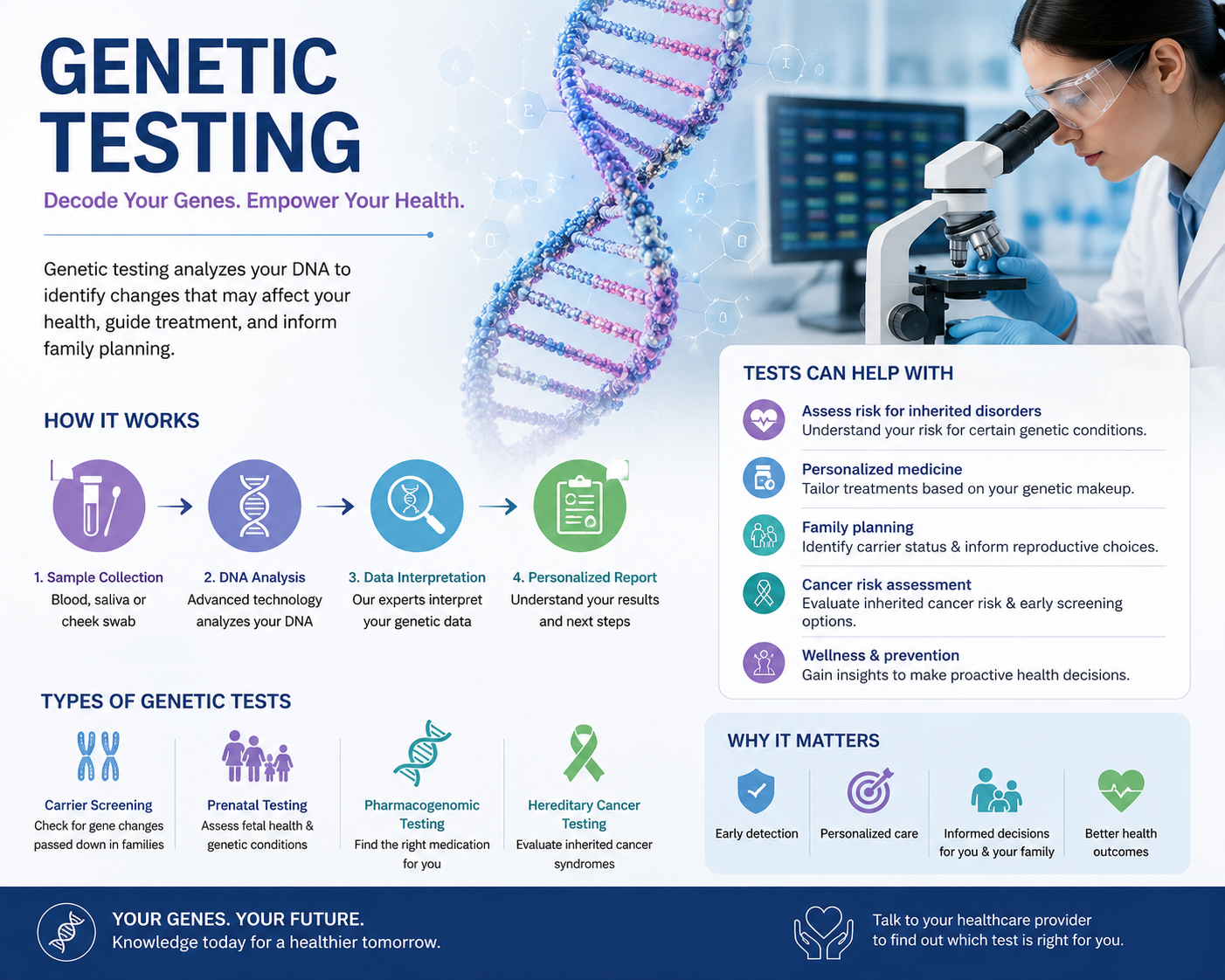
Genetic Testing
When you're going through fertility treatment, your goal is not just to achieve a positive pregnancy test—it's to have a healthy pregnancy and bring home a healthy baby.
For some individuals and couples, genetic factors can affect embryo development, implantation, pregnancy outcomes, or the risk of passing inherited conditions to their children. This is where Preimplantation Genetic Testing (PGT) can play an important role.
Genetic testing allows fertility specialists to evaluate embryos before they are transferred during an IVF cycle, helping identify certain chromosomal abnormalities or inherited genetic conditions.
Dr. Shipra Singla offers advanced genetic testing options as part of personalized IVF treatment plans. Depending on your medical history, family history, and fertility challenges, she may recommend PGT-A, PGT-M, or PGT-SR to help improve treatment planning and support informed decision-making.
What Is Preimplantation Genetic Testing (PGT)?
Preimplantation Genetic Testing (PGT) is an advanced laboratory procedure performed during an IVF cycle.
After embryos develop to the blastocyst stage, a few cells are carefully collected and analyzed in a specialized genetics laboratory. The embryos are then evaluated for specific chromosomal or genetic abnormalities before embryo transfer.
The goal of PGT is to identify embryos that may have the best potential for a healthy pregnancy while reducing the risk of certain genetic conditions.
It's important to understand that PGT does not create healthier embryos. Instead, it helps identify important genetic information that can assist in treatment planning.
Who May Benefit from Genetic Testing During IVF?
Genetic testing may be recommended for patients who have:
- Recurrent pregnancy loss
- Repeated IVF failures
- Advanced maternal age
- A family history of genetic disorders
- Known inherited conditions
- Previous pregnancies affected by genetic abnormalities
- Structural chromosomal rearrangements
- Concerns about embryo chromosome health
During your fertility consultation, Dr. Shipra Singla will review your medical and family history to determine whether genetic testing may be beneficial in your specific situation.
PGT-A (Preimplantation Genetic Testing for Aneuploidy)
What Is PGT-A?
PGT-A is designed to evaluate whether an embryo has the correct number of chromosomes.
A healthy embryo typically contains 46 chromosomes arranged in 23 pairs. Sometimes embryos may develop with too many or too few chromosomes, a condition known as aneuploidy.
Embryos with chromosomal abnormalities may have a lower chance of implantation, may result in miscarriage, or may lead to certain chromosomal conditions.
PGT-A helps identify embryos with normal chromosome numbers before transfer.
When Is PGT-A Recommended?
Dr. Shipra Singla may recommend PGT-A for:
- Women of advanced maternal age
- Recurrent miscarriage
- Multiple unsuccessful IVF cycles
- Previous chromosomal abnormalities in pregnancy
- Patients seeking single embryo transfer
PGT-A helps provide valuable information about embryos for transfer.
Potential Benefits of PGT-A
PGT-A may help:
- Identify chromosomally normal embryos
- Reduce the likelihood of transferring embryos with chromosomal abnormalities
The decision to use PGT-A is always personalized based on individual fertility circumstances.
PGT-M (Preimplantation Genetic Testing for Monogenic Disorders)
What Is PGT-M?
PGT-M is used when one or both intended parents carry a specific inherited genetic condition.
Unlike PGT-A, which focuses on chromosome numbers, PGT-M looks for a particular genetic mutation that could be passed to a child.
This allows embryos to be screened for specific inherited diseases before transfer.
When Is PGT-M Recommended?
PGT-M may be recommended when there is a known risk of passing on genetic disorders such as:
- Thalassemia
- Sickle Cell Disease
- Cystic Fibrosis
- Huntington's Disease
- Muscular Dystrophy
- Tay-Sachs Disease
- Certain inherited metabolic disorders
- Other single-gene genetic conditions
Before treatment begins, specialized genetic testing is performed to identify the specific mutation being evaluated.
Benefits of PGT-M
PGT-M may help:
- Reduce the risk of passing inherited genetic conditions to a child
- Provide reassurance for families with known genetic disorders
- Improve reproductive planning for affected couples
For many families, PGT-M offers hope when concerns about inherited diseases have previously complicated family-building decisions.
PGT-SR (Preimplantation Genetic Testing for Structural Rearrangements)
What Is PGT-SR?
PGT-SR is designed for individuals who carry specific chromosomal structural abnormalities.
Some people have balanced chromosomal rearrangements, such as translocations or inversions, without experiencing any health problems themselves. However, these rearrangements can increase the risk of:
- Infertility
- Recurrent miscarriage
- Failed IVF cycles
- Embryos with chromosomal imbalances
PGT-SR helps identify embryos that have inherited balanced chromosome structures suitable for transfer.
When Is PGT-SR Recommended?
Dr. Shipra Singla may recommend PGT-SR if:
- One partner has a balanced translocation
- One partner has a chromosomal inversion
- Recurrent pregnancy loss has occurred
- Multiple IVF failures have occurred
- Chromosomal abnormalities have been identified through genetic testing
Specialized chromosome analysis is usually performed before treatment to determine whether PGT-SR is appropriate.
Benefits of PGT-SR
PGT-SR may help:
- Identify embryos with balanced chromosome structures
- Reduce the risk of miscarriage related to chromosomal imbalance
- planning for couples with chromosomal rearrangements
This testing provides valuable information for patients facing complex genetic fertility challenges.
How Is Genetic Testing Performed During IVF?
Many patients worry that genetic testing might affect embryo development. Understanding the process often helps ease these concerns.
Step 1: IVF Treatment
The process begins with IVF, during which eggs are retrieved and fertilized in the laboratory.
Step 2: Embryo Development
The embryos are allowed to grow until they reach the blastocyst stage, usually around Day 5 or Day 6.
Step 3: Embryo Biopsy
A small number of cells are carefully removed from the outer layer of the embryo.
The cells used for testing do not come from the part of the embryo that develops into the baby.
Step 4: Genetic Analysis
The sample is sent to a specialized genetics laboratory for analysis.
Step 5: Embryo Transfer Planning
Once results are available, Dr. Shipra Singla discusses the findings and helps determine the most suitable embryo for transfer based on your treatment goals.
Does Genetic Testing Guarantee a Healthy Baby?
This is one of the most common questions patients ask.
While PGT provides valuable genetic information, no test can guarantee a completely healthy pregnancy or baby.
Genetic testing focuses on specific chromosomal or genetic abnormalities being evaluated. Other factors that affect pregnancy outcomes may still exist.
Dr. Shipra Singla believes in providing realistic expectations and helping patients understand both the benefits and limitations of genetic testing before making treatment decisions.
Dr. Shipra Singla's Approach to Genetic Testing
Genetic testing is a highly personal decision and may not be necessary for every IVF patient.
Dr. Shipra Singla carefully evaluates:
- Fertility history
- Family history
- Previous pregnancy outcomes
- Genetic risk factors
- IVF treatment goals
before recommending any form of PGT.
Her approach focuses on:
- Personalized fertility care
- Evidence-based treatment recommendations
- Advanced reproductive technologies
- Thorough patient counseling
- Clear communication
- Compassionate support throughout the IVF journey
Every recommendation is made with the goal of helping patients make informed and confident decisions about their fertility treatment.
Frequently Asked Questions About Genetic Testing in IVF
What is the difference between PGT-A, PGT-M, and PGT-SR?
- PGT-A checks for abnormal chromosome numbers.
- PGT-M screens for specific inherited genetic disorders.
- PGT-SR evaluates embryos when a parent carries a structural chromosome rearrangement.
Is genetic testing necessary for every IVF cycle?
No. Genetic testing is recommended only when it may provide meaningful clinical benefits based on a patient's medical history and fertility profile.
Can genetic testing improve IVF success?
In selected cases, genetic testing may help with treatment planning.
Is embryo biopsy safe?
Embryo biopsy is performed using advanced laboratory techniques by trained embryologists as part of established IVF protocols.
Who should consider genetic testing?
Patients with recurrent miscarriage, advanced maternal age, inherited genetic disorders, previous IVF failures, or chromosomal abnormalities may benefit from discussing genetic testing options.
Take the Next Step Toward a Healthy Pregnancy
If you're considering IVF treatment and would like to understand whether genetic testing may be beneficial for your situation, expert guidance can help you make informed decisions about your fertility care.
Schedule a consultation with Dr. Shipra Singla today to discuss PGT-A, PGT-M, and PGT-SR, explore your fertility options, and create a personalized treatment plan designed around your family-building goals.
Because every parent wants the healthiest possible start for their child—and knowledge can be a powerful part of that journey.