
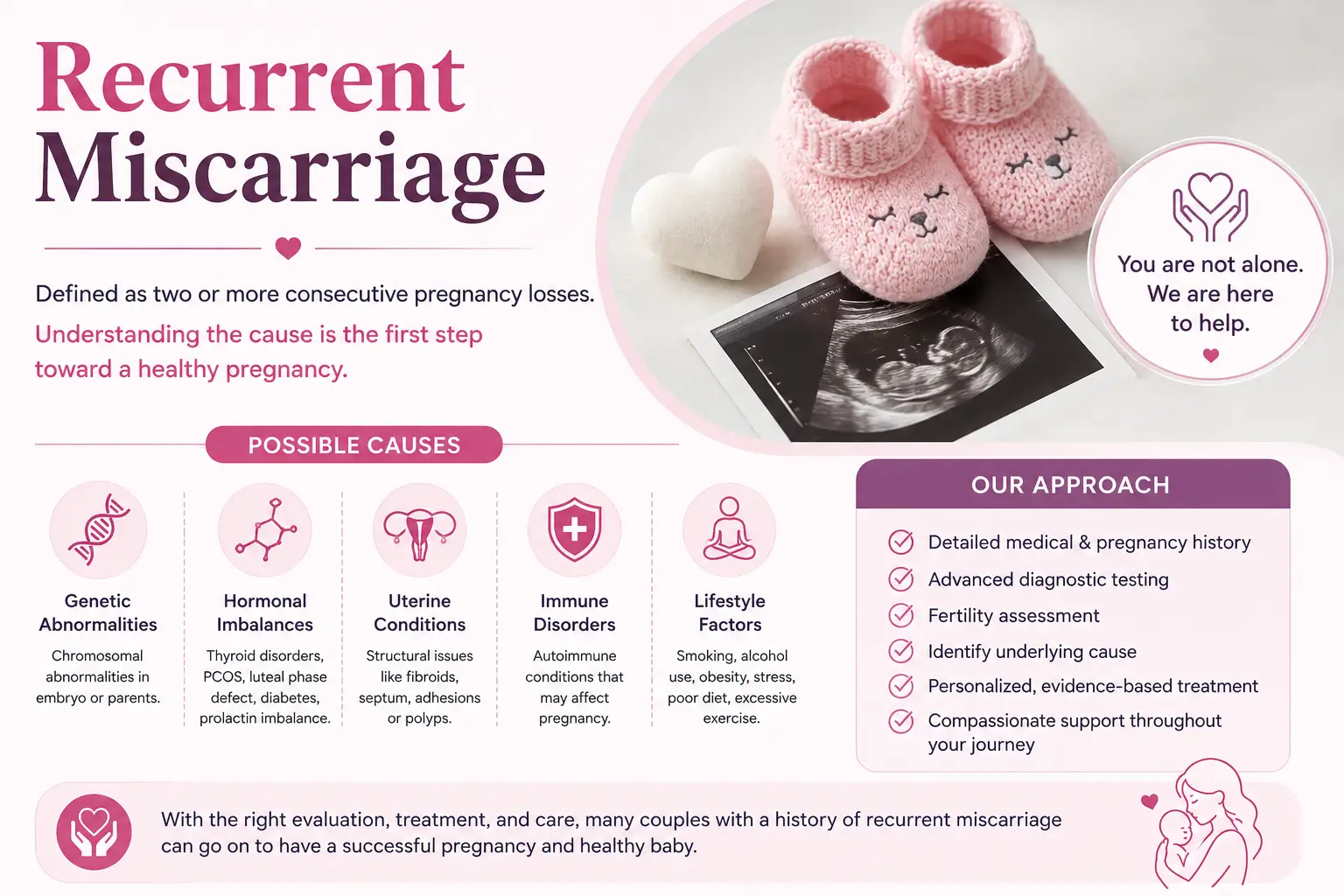
Recurrent Miscarriage
Experiencing a miscarriage can be one of the most heartbreaking moments in a person's life. The emotional pain, unanswered questions, and uncertainty about the future can feel overwhelming. When pregnancy loss happens more than once, the experience can become even more distressing, leaving many couples wondering if they will ever be able to carry a pregnancy successfully.
If you've experienced multiple miscarriages, you're not alone—and it's important to know that recurrent pregnancy loss often has an underlying cause that can be identified and treated.
Dr. Shipra Singla provides comprehensive evaluation and personalized treatment for couples experiencing recurrent miscarriage. Through advanced fertility testing, detailed investigations, and evidence-based treatment plans, she helps patients understand the reasons behind repeated pregnancy loss and explore the best path toward a healthy pregnancy.
What is Recurrent Miscarriage?
Recurrent miscarriage, also known as Recurrent Pregnancy Loss (RPL), generally refers to the loss of two or more pregnancies before 20 weeks of gestation.
While a single miscarriage is relatively common, repeated pregnancy losses often require further medical evaluation to identify potential contributing factors.
Many couples blame themselves after a miscarriage, but in most cases, pregnancy loss occurs due to medical reasons that are beyond anyone's control.
The good news is that with proper diagnosis and treatment, many couples with a history of recurrent miscarriage go on to achieve successful pregnancies.
Understanding the Emotional Impact of Recurrent Miscarriage
Repeated pregnancy loss affects much more than physical health.
Many patients experience:
- Grief and sadness
- Anxiety about future pregnancies
- Feelings of frustration and helplessness
- Fear of becoming pregnant again
- Emotional exhaustion after multiple losses
At Dr. Shipra Singla's fertility practice, emotional support is considered an important part of care. Every patient's journey is unique, and compassionate guidance can make a meaningful difference during this difficult time.
What Causes Recurrent Miscarriage?
One of the most important steps in managing recurrent miscarriage is identifying the underlying cause.
In many cases, pregnancy loss occurs due to factors that can be diagnosed and treated.
Common causes include:
Chromosomal Abnormalities
Genetic or chromosomal abnormalities in the embryo are among the most common causes of miscarriage.
Sometimes embryos develop with abnormal chromosome numbers, making healthy development difficult.
Advanced fertility testing may help identify these issues during fertility treatment.
Uterine Abnormalities
Certain structural conditions affecting the uterus can interfere with embryo implantation or pregnancy development.
Examples include:
- Uterine septum
- Fibroids affecting the uterine cavity
- Uterine adhesions
- Congenital uterine abnormalities
These conditions may sometimes be corrected through appropriate treatment.
Hormonal Imbalances
Hormones play a vital role in supporting early pregnancy.
Hormonal factors associated with recurrent miscarriage may include:
- Thyroid disorders
- Polycystic Ovary Syndrome (PCOS)
- Low progesterone levels
- Insulin resistance
- Other endocrine conditions
Managing these issues may improve pregnancy outcomes.
Autoimmune Conditions
Certain autoimmune disorders can increase the risk of pregnancy loss.
Examples include:
- Antiphospholipid Syndrome (APS)
- Autoimmune thyroid disease
- Other immune-related conditions
Specialized testing can help identify these factors when appropriate.
Blood Clotting Disorders
Some inherited or acquired clotting disorders may interfere with blood flow to the developing pregnancy.
These conditions can sometimes be managed successfully with appropriate medical treatment.
Genetic Factors in Parents
In some cases, one partner may carry a chromosomal rearrangement that does not affect their own health but may increase the risk of miscarriage.
Genetic testing can help identify these situations and guide future treatment planning.
Lifestyle and Health Factors
Certain lifestyle factors may contribute to reproductive challenges, including:
- Smoking
- Excessive alcohol consumption
- Obesity
- Uncontrolled medical conditions
- Significant stress and poor overall health
Addressing these factors can support overall fertility and pregnancy health.
When Should You Seek Medical Help for Recurrent Miscarriage?
Many couples wait until after multiple losses before seeking specialist care.
You should consider consulting a fertility specialist if:
- You have experienced two or more miscarriages.
- You have difficulty maintaining a pregnancy.
- Previous testing has not identified a cause.
- You are concerned about future pregnancy outcomes.
- You have a family history of genetic conditions.
- You are over the age of 35 and have experienced pregnancy loss.
Early evaluation can often provide valuable answers and treatment opportunities.
How Dr. Shipra Singla Evaluates Recurrent Miscarriage
Because recurrent miscarriage can have multiple causes, a thorough evaluation is essential.
Dr. Shipra Singla may recommend:
Detailed Medical History Review
Understanding previous pregnancies, miscarriage history, and overall health helps identify important clues.
Hormonal Testing
Blood tests may be performed to evaluate:
- Thyroid function
- Progesterone levels
- Reproductive hormones
- Metabolic health
Ultrasound and Uterine Assessment
Imaging studies help evaluate the structure and health of the uterus.
Genetic Testing
Testing may be recommended for:
- Parents
- Pregnancy tissue (when available)
- Embryos during IVF treatment
Autoimmune and Clotting Evaluations
Specialized blood tests may identify immune or clotting conditions associated with pregnancy loss.
The goal is to uncover any factors that may be contributing to repeated miscarriages and create an individualized treatment strategy.
Treatment Options for Recurrent Miscarriage
Treatment depends entirely on the underlying cause.
Some patients may require simple medical management, while others benefit from advanced fertility treatment.
Potential treatment approaches include:
Hormonal Support
Hormonal medications may be prescribed when hormone imbalances are identified.
Management of Thyroid or Metabolic Conditions
Optimizing overall health can improve pregnancy outcomes.
Treatment of Autoimmune Conditions
Certain immune-related disorders can be managed with specialized treatment protocols.
Surgical Correction of Uterine Abnormalities
Structural uterine issues may sometimes be corrected through minimally invasive procedures.
IVF with Genetic Testing
For patients with chromosomal concerns, IVF combined with Preimplantation Genetic Testing (PGT-A, PGT-M, or PGT-SR) may help identify embryos with normal genetic profiles before transfer.
Personalized Pregnancy Monitoring
Close monitoring during early pregnancy can provide reassurance and allow timely management when necessary.
How IVF Can Help in Cases of Recurrent Miscarriage
Many couples are surprised to learn that IVF treatment can play an important role in reducing the risk of recurrent miscarriage, especially when genetic or chromosomal abnormalities are contributing factors.
While IVF is not necessary for every patient with recurrent pregnancy loss, it may be recommended in certain situations where repeated miscarriages are linked to embryo quality, age-related fertility decline, or genetic concerns.
IVF with Genetic Testing (PGT-A)
One of the most common causes of miscarriage is a chromosomal abnormality in the embryo. As women age, the likelihood of chromosomal abnormalities in eggs increases, which can lead to implantation failure or pregnancy loss.
Through IVF, embryos can be created in the laboratory and tested using Preimplantation Genetic Testing for Aneuploidy (PGT-A) before transfer.
This allows Dr. Shipra Singla to identify embryos with the correct number of chromosomes and select those with the highest potential for a healthy pregnancy.
For some couples, this approach may help reduce the risk of miscarriage and improve the chances of a successful pregnancy.
IVF for Genetic Conditions
If one or both partners carry an inherited genetic condition or chromosomal rearrangement, IVF combined with PGT-M or PGT-SR can help identify embryos that are less likely to be affected by these genetic issues.
This can be particularly beneficial for couples who have experienced multiple pregnancy losses due to underlying genetic factors.
Better Embryo Selection
During IVF treatment, embryologists carefully monitor embryo development and identify embryos with strong growth potential.
Advanced techniques such as:
- Blastocyst Culture
- Genetic Testing (PGT)
- Time-Lapse Embryo Monitoring (where available)
- Assisted Hatching (when appropriate)
can provide additional information that supports embryo selection and treatment planning.
Personalized Treatment for Complex Cases
Recurrent miscarriage is often caused by multiple factors rather than a single issue. IVF allows fertility specialists to create a more controlled treatment environment and tailor the approach based on the patient's unique fertility profile.
For patients with:
- Repeated unexplained miscarriages
- Advanced maternal age
- Poor egg quality
- Genetic abnormalities
- Multiple failed fertility treatments
IVF may offer an additional pathway toward achieving a healthy pregnancy.
Is IVF Always Necessary After Recurrent Miscarriage?
Not necessarily.
Many patients successfully conceive naturally after appropriate treatment for hormonal, uterine, immune, or lifestyle-related factors.
However, when recurrent miscarriages are linked to embryo chromosomal abnormalities, genetic conditions, or repeated implantation failures, IVF with genetic testing may provide valuable insights and improve treatment outcomes.
During your consultation, Dr. Shipra Singla will carefully review your miscarriage history, fertility evaluation, and previous pregnancy outcomes to determine whether IVF should be considered as part of your treatment plan.
Can You Have a Healthy Pregnancy After Recurrent Miscarriage?
This is often the biggest concern for patients who have experienced multiple losses.
The encouraging news is that many couples with recurrent miscarriage go on to have successful pregnancies after receiving appropriate evaluation and treatment.
Success depends on:
- Identifying underlying causes
- Individual fertility factors
- Maternal age
- Overall reproductive health
- Personalized treatment planning
Even when the cause remains unexplained, many patients still achieve healthy pregnancies with expert fertility care and close monitoring.
Dr. Shipra Singla's Approach to Recurrent Miscarriage Care
Recurrent miscarriage requires more than medical testing—it requires understanding, empathy, and a commitment to finding answers.
Dr. Shipra Singla's approach focuses on:
- Comprehensive miscarriage evaluation
- Advanced diagnostic testing
- Evidence-based treatment planning
- Personalized fertility care
- Ongoing pregnancy support
- Clear communication and guidance
- Compassionate emotional support
Every treatment plan is tailored to the patient's unique medical history and reproductive goals.
Frequently Asked Questions About Recurrent Miscarriage
How many miscarriages are considered recurrent miscarriage?
Generally, two or more pregnancy losses may warrant a detailed evaluation.
Can recurrent miscarriage be treated?
In many cases, yes. Treatment depends on identifying the underlying cause.
Will I need IVF after a recurrent miscarriage?
Not always. IVF is only recommended when it is likely to provide a clinical benefit based on the patient's fertility profile.
Can genetic testing help?
Genetic testing may identify chromosomal factors that contribute to repeated pregnancy loss and guide treatment decisions.
Is it possible to have a healthy pregnancy after multiple miscarriages?
Yes. Many couples with a history of recurrent miscarriage go on to achieve successful pregnancies with proper evaluation and treatment.
Take the Next Step Toward a Healthy Pregnancy
Experiencing multiple miscarriages can be emotionally exhausting, especially when each loss leaves you searching for answers. If you've faced recurrent pregnancy loss, understanding the underlying cause is the first step toward finding the right treatment and improving your chances of a successful pregnancy.
Dr. Shipra Singla offers comprehensive recurrent miscarriage evaluations to identify factors that may be affecting your pregnancy outcomes. Depending on your individual diagnosis, treatment may include hormonal support, management of underlying medical conditions, advanced fertility treatments, or IVF with genetic testing (PGT-A, PGT-M, or PGT-SR) to help identify embryos with the best potential for a healthy pregnancy.
Schedule a consultation with Dr. Shipra Singla today to explore your options, understand whether IVF may be beneficial in your case, and receive a personalized treatment plan designed to help you move closer to a healthy pregnancy and a successful birth.
Every miscarriage story is different, which is why every treatment plan should be too. With expert fertility care, advanced reproductive technology, and compassionate support, there is hope for the future and a path forward toward building the family you've been dreaming of.