
Best ICSI Treatment in NOIDA/DELHI
Trying to conceive can be an emotional journey. For many couples, pregnancy happens naturally within a few months. For others, months turn into years, bringing frustration, uncertainty, and countless questions.
When fertility challenges arise, it's important to understand that infertility can affect both men and women. In fact, male infertility contributes to a significant number of fertility cases. The good news is that advances in reproductive medicine have made parenthood possible for many couples who once had limited options.
One such breakthrough is ICSI treatment (Intracytoplasmic Sperm Injection), an advanced fertility technique that has helped countless couples achieve successful pregnancies.
Dr. Shipra Singla provides personalized fertility care and recommends ICSI treatment when it offers the best chance of overcoming specific fertility challenges. By combining advanced reproductive technology with individualized treatment planning, she helps couples move one step closer to their dream of parenthood.
What Is ICSI Treatment?
ICSI, or Intracytoplasmic Sperm Injection, is a specialized fertility procedure commonly performed as part of an IVF cycle.
Unlike conventional IVF, where sperm and eggs are combined in a laboratory dish and fertilization occurs naturally, ICSI involves injecting a single healthy sperm directly into a mature egg. This technique significantly improves the chances of fertilization, particularly in cases where sperm quality is a concern.
ICSI has transformed fertility treatment for couples facing male infertility and has become one of the most successful assisted reproductive technologies available today.
When Is ICSI Treatment Recommended?
Not every patient undergoing IVF requires ICSI. During your fertility evaluation, Dr. Shipra Singla carefully reviews your medical history, test results, and fertility diagnosis to determine the most appropriate treatment approach.
ICSI may be recommended in cases such as:
- Low sperm count
- Poor sperm motility (movement)
- Abnormal sperm morphology (shape)
- Severe male infertility
- Previous IVF fertilization failure
- Surgically retrieved sperm
- Unexplained infertility
- Frozen sperm samples with limited quality
- Fertility challenges requiring advanced laboratory techniques
For many couples, ICSI can dramatically improve fertilization rates and increase the likelihood of creating healthy embryos.
Understanding Male Infertility
Many people assume fertility challenges are primarily related to female reproductive health. However, male factor infertility is involved in a large percentage of infertility cases.
Common causes of male infertility include:
- Low sperm production
- Poor sperm movement
- Abnormal sperm structure
- Hormonal imbalances
- Genetic factors
- Previous infections
- Varicocele
- Lifestyle factors such as smoking or excessive alcohol consumption
Because male infertility can often go unnoticed, a thorough fertility evaluation is an essential part of determining the best treatment plan.
How Does ICSI Treatment Work?
One reason patients feel reassured about ICSI is that the procedure is performed using highly advanced laboratory techniques designed to maximize fertilization potential.
Step 1: Comprehensive Fertility Evaluation
Every treatment journey begins with a detailed assessment.
Dr. Shipra Singla may recommend:
- Hormonal testing
- Ultrasound examinations
- Ovarian reserve assessment
- Semen analysis
- Medical history review
- Additional fertility investigations when needed
Understanding the underlying cause of infertility helps create the most effective treatment strategy.
Step 2: IVF Cycle Preparation
Because ICSI is typically performed as part of IVF treatment, the process begins with ovarian stimulation.
Fertility medications help the ovaries produce multiple mature eggs, which are then monitored through regular scans and blood tests.
Step 3: Egg Retrieval
Once the eggs have matured, they are collected through a minimally invasive procedure known as egg retrieval.
Most patients return home the same day and recover quickly.
Step 4: Sperm Selection and Injection
This is where ICSI differs from conventional IVF.
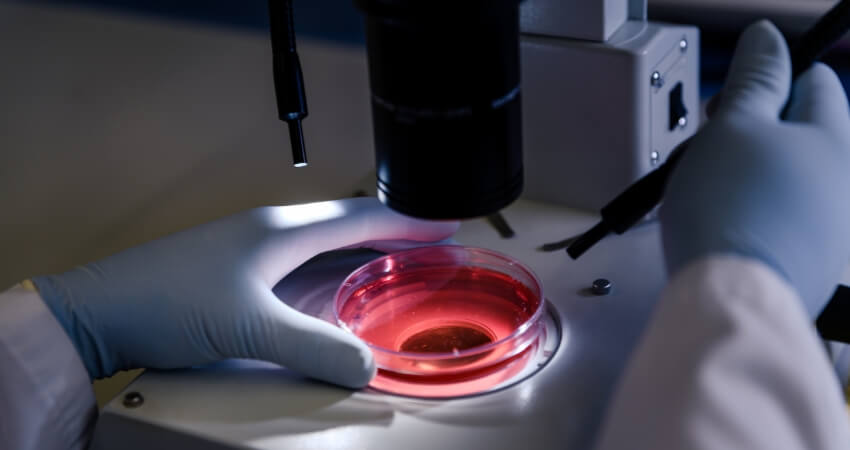
An experienced embryologist carefully selects a healthy sperm and injects it directly into a mature egg using specialized microscopic equipment.
This precise technique helps overcome many barriers that may prevent natural fertilization.
Step 5: Embryo Development
Following fertilization, the embryos are monitored closely in the laboratory.
The healthiest embryos are identified based on their development and quality.
Step 6: Embryo Transfer
A good quality embryo is transferred into the uterus in a simple and usually painless procedure.
This is often one of the most anticipated moments of the fertility journey.
Step 7: Pregnancy Testing
Approximately two weeks after embryo transfer, a pregnancy test is performed to determine whether implantation has occurred.
Throughout every stage, Dr. Shipra Singla provides guidance, monitoring, and support to ensure patients feel informed and confident.
Benefits of ICSI Treatment
ICSI has become one of the most effective fertility treatments for couples dealing with male infertility.
Some of the key advantages include:
Improved Fertilization Rates
By directly injecting sperm into the egg, ICSI helps overcome many sperm-related fertilization challenges.
Effective for Severe Male Infertility
Even in cases involving very low sperm counts or poor sperm movement, ICSI may provide an opportunity for successful fertilization.
Useful After Previous IVF Failure
Couples who experienced poor fertilization during previous IVF cycles may benefit from ICSI.
Advanced Laboratory Precision
The procedure utilizes highly specialized reproductive technology and expert embryology techniques.
Increased Family-Building Opportunities
ICSI has enabled many couples facing complex fertility issues to achieve successful pregnancies and build their families.
ICSI vs IVF: What's the Difference?
Patients often ask whether IVF and ICSI are the same.
While they share many similarities, there is one important difference.
In traditional IVF, eggs and sperm are placed together in a laboratory dish and fertilization occurs naturally.
In ICSI, a single sperm is carefully injected directly into the egg.
ICSI is often recommended when male infertility factors are present or when previous fertilization attempts have been unsuccessful.
During your consultation, Dr. Shipra Singla will explain whether IVF alone or IVF with ICSI offers the best chance of success for your situation.
Who Can Benefit Most from ICSI?
ICSI may be particularly beneficial for:
- Couples with severe male infertility
- Patients using surgically retrieved sperm
- Couples with previous IVF fertilization failure
- Patients with low sperm count or poor sperm quality
- Couples experiencing unexplained infertility
- Individuals using frozen sperm samples
Every fertility case is different, which is why treatment recommendations are always based on a detailed fertility assessment.
Dr. Shipra Singla's Approach to ICSI Treatment
Successful fertility care involves much more than advanced technology. It requires understanding each patient's unique challenges and creating a treatment plan that reflects their individual needs.
Dr. Shipra Singla's approach focuses on:
- Comprehensive fertility evaluation
- Personalized treatment planning
- Evidence-based fertility care
- Advanced reproductive technologies
- Careful monitoring throughout treatment
- Transparent communication
- Compassionate patient support
Patients appreciate having a fertility specialist who takes the time to explain options, answer questions, and guide them through every stage of treatment.
When Should You See a Fertility Specialist?
Many couples delay seeking help because they hope pregnancy will happen naturally with more time.
You should consider consulting a fertility specialist if:
- You have been trying to conceive for over one year.
- You are over the age of 35 and have been trying for six months.
- A semen analysis has revealed abnormalities.
- Previous fertility treatments have not been successful.
- You have experienced recurrent pregnancy loss.
- You have concerns about male fertility.
Early evaluation can help identify potential issues and create a clear path forward.
Why Patients Choose Dr. Shipra Singla for ICSI Treatment
Choosing a fertility specialist is an important step in your journey toward parenthood.
Patients trust Dr. Shipra Singla because of her:
- Personalized fertility treatment plans
- Expertise in advanced reproductive care
- Comprehensive fertility evaluations
- Patient-centered approach
- Commitment to evidence-based treatment
- Supportive and compassionate care
Her goal is to help every patient feel informed, empowered, and confident throughout their fertility journey.
Frequently Asked Questions About ICSI Treatment
Is ICSI treatment painful?
The ICSI procedure itself is performed in the laboratory. Patients undergo IVF-related procedures, which are carefully managed to ensure comfort and safety.
Is ICSI more successful than IVF?
ICSI can improve fertilization rates in cases involving male infertility. However, the most appropriate treatment depends on the individual fertility diagnosis.
Can ICSI overcome low sperm count?
Yes. ICSI is commonly used for patients with low sperm count and other sperm-related fertility challenges.
Is ICSI always required during IVF?
No. ICSI is recommended only when specific fertility factors indicate that it may improve the chances of fertilization.
Are babies born through ICSI healthy?
ICSI has been used successfully for many years and has helped millions of families worldwide achieve healthy pregnancies and births.
Take the Next Step Toward Parenthood
If you've been struggling with infertility or have been told that male fertility factors may be affecting your chances of conception, expert guidance can help you understand your options.
Schedule a consultation with Dr. Shipra Singla today to learn whether ICSI treatment may be right for you. Together, you can explore the most suitable fertility solutions and take the next step toward building the family you've been hoping for.
Because every parenthood journey is unique—and with the right care and support, new possibilities can begin.