
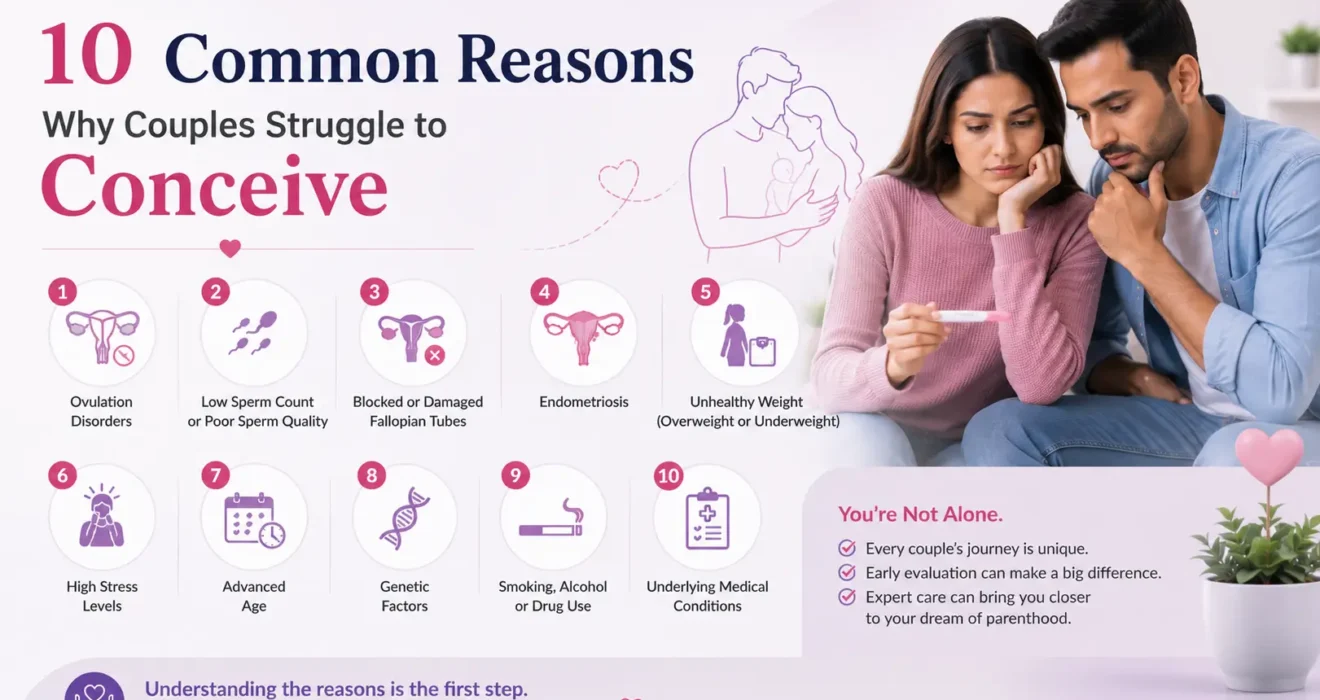
10 Common Reasons Why Couples Struggle to Conceive
For many couples, starting a family feels like a natural next step in life. However, when pregnancy doesn’t happen despite months of trying, it can lead to frustration, stress, and countless unanswered questions. The good news is that infertility is more common than many people realize, and in most cases, effective fertility treatments can help.
Understanding the possible causes of infertility is often the first step toward finding the right solution. Here are 10 common reasons why couples may struggle to conceive.
1. Polycystic Ovary Syndrome (PCOS)
PCOS is one of the leading causes of female infertility. Women with PCOS often experience hormonal imbalances that can interfere with regular ovulation.
Common symptoms include:
Irregular periods
Weight gain
Acne
Excess facial hair
Difficulty getting pregnant
Fortunately, many women with PCOS successfully conceive with lifestyle modifications, medications, IUI, or IVF treatment.
2. Advanced Maternal Age
A woman’s fertility naturally declines with age, particularly after 35 years.
As age increases:
Egg quality decreases
Egg quantity reduces
Miscarriage risk increases
IVF success rates may decline
Many women still achieve successful pregnancies in their late 30s and early 40s, but timely fertility evaluation becomes increasingly important.
3. Male Infertility Factors
Infertility is not solely a female issue. Male infertility contributes to nearly half of all infertility cases.
Common causes include:
Low sperm count
Poor sperm motility
Abnormal sperm shape
Hormonal imbalances
Varicocele
Lifestyle factors such as smoking and alcohol use
A simple semen analysis can provide valuable information about male fertility health.
4. Endometriosis
Endometriosis occurs when tissue similar to the uterine lining grows outside the uterus.
This condition may affect:
Ovulation
Egg quality
Fallopian tube function
Embryo implantation
Women with endometriosis often experience painful periods, pelvic pain, and difficulty conceiving.
5. Blocked Fallopian Tubes
For natural conception to occur, the egg and sperm must meet inside the fallopian tubes.
Blocked or damaged tubes can prevent fertilization and may result from:
Pelvic infections
Previous surgeries
Endometriosis
Tubal disease
In many such cases, IVF treatment becomes one of the most effective fertility solutions.
6. Low Ovarian Reserve
Some women have fewer eggs available than expected for their age. This condition is known as diminished ovarian reserve.
Women with low ovarian reserve may:
Respond poorly to fertility medications
Produce fewer eggs during IVF
Experience difficulty conceiving naturally
Early fertility assessment can help identify this condition and guide treatment planning.
7. Hormonal Imbalances
Several hormones work together to regulate ovulation and fertility.
Conditions such as:
Thyroid disorders
Elevated prolactin levels
Insulin resistance
Ovulation disorders
can interfere with reproductive health and reduce the chances of conception.
Treating the underlying hormonal issue often improves fertility outcomes.
8. Unhealthy Lifestyle Habits
Modern lifestyles can significantly impact fertility in both men and women.
Factors that may affect reproductive health include:
Smoking
Excessive alcohol consumption
Obesity
Poor nutrition
Lack of exercise
Chronic stress
Making positive lifestyle changes can enhance fertility and improve treatment success rates.
9. Recurrent Pregnancy Loss
Some couples can conceive but experience repeated miscarriages.
Possible causes include:
Genetic abnormalities
Hormonal disorders
Uterine abnormalities
Autoimmune conditions
Blood clotting disorders
A thorough fertility evaluation can often identify the underlying reason and help improve future pregnancy outcomes.
10. Unexplained Infertility
In some cases, all fertility tests appear normal, yet pregnancy does not occur.
This is known as unexplained infertility.
Although frustrating, unexplained infertility is a recognized medical condition, and many couples successfully conceive through fertility treatments such as ovulation induction, IUI, or IVF.
When Should You See a Fertility Specialist?
You should consider consulting a fertility specialist if:
You have been trying to conceive for over one year without success.
You are over 35 and have been trying for six months.
You have irregular periods.
You have a history of endometriosis or PCOS.
You have experienced multiple miscarriages.
There is a known male fertility issue.
Early evaluation can often identify problems before they become more difficult to treat.
How Can Fertility Treatments Help?
Modern fertility treatments offer hope for many couples struggling to conceive.
Depending on the cause of infertility, treatment options may include:
Fertility medications
Ovulation induction
IUI (Intrauterine Insemination)
IVF (In Vitro Fertilization)
ICSI
Egg Freezing
Donor Programs
Fertility-enhancing procedures
The right treatment plan is always based on an individual’s specific fertility needs.
Final Thoughts
Struggling to conceive can be emotionally challenging, but you are not alone. Infertility affects millions of couples worldwide, and many causes can be successfully diagnosed and treated with the right medical guidance.
If you have concerns about your fertility, seeking help from an experienced fertility specialist can provide clarity, answers, and a personalized path toward parenthood. The earlier fertility issues are identified, the greater the opportunities for successful treatment and a healthy pregnancy.