
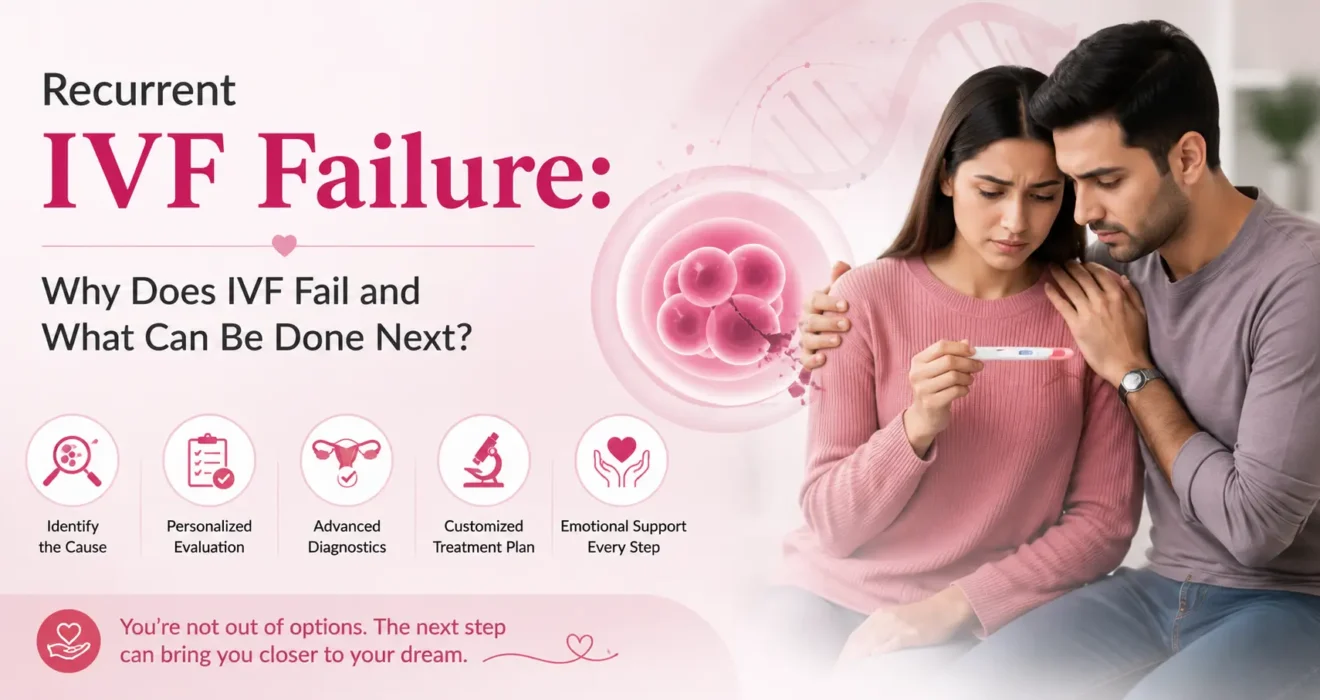
Recurrent IVF Failure: Why Does IVF Fail and What Can Be Done Next?
Going through an IVF cycle requires immense emotional, physical, and financial commitment. When an IVF attempt does not result in pregnancy, couples often experience disappointment, frustration, and confusion. One of the most common questions fertility specialists hear is, “Why did my IVF fail despite doing everything right?”
The truth is that a failed IVF cycle does not mean you cannot become parents. In many cases, identifying the underlying cause and making the necessary adjustments can significantly improve the chances of success in future treatment cycles.
What Is Recurrent IVF Failure?
Recurrent IVF failure generally refers to repeated unsuccessful IVF cycles despite the transfer of good-quality embryos.
While there is no universal definition, fertility specialists usually investigate further when a couple has experienced multiple failed embryo transfers or repeated unsuccessful IVF attempts.
Understanding the reason behind IVF failure is the first step toward finding a solution.
Common Reasons Why IVF Fails
1. Embryo Quality Issues
Even when embryos appear healthy under the microscope, some may carry genetic abnormalities that prevent successful implantation or development.
Embryo quality can be influenced by:
Maternal age
Egg quality
Sperm quality
Genetic factors
Since embryo health plays a crucial role in pregnancy success, it is often one of the first areas evaluated after a failed IVF cycle.
2. Age-Related Fertility Decline
Female age remains one of the most important factors affecting IVF success.
As women age:
Egg quality declines
Chromosomal abnormalities increase
Implantation rates decrease
Women over 35 may require a more individualized fertility strategy to maximize success.
3. Implantation Failure
Sometimes a healthy embryo is transferred successfully, but implantation does not occur.
Possible causes include:
Endometrial abnormalities
Thin uterine lining
Endometrial inflammation
Hormonal imbalances
Uterine polyps or fibroids
A detailed evaluation of the uterine cavity may help identify factors affecting implantation.
4. Male Infertility Factors
Many people focus only on egg quality, but sperm health is equally important.
Factors that may affect embryo development include:
Low sperm count
Poor motility
Abnormal sperm morphology
Sperm DNA fragmentation
Advanced testing can sometimes uncover hidden male fertility issues that may contribute to repeated IVF failures.
5. Endometriosis and Adenomyosis
Women with endometriosis or adenomyosis may face additional fertility challenges.
These conditions can affect:
Egg quality
Embryo development
Implantation
Pregnancy outcomes
Proper diagnosis and treatment can improve the chances of future IVF success.
6. Low Ovarian Reserve
Women with diminished ovarian reserve may produce fewer eggs during IVF treatment.
Fewer eggs can reduce the number of embryos available for selection, which may impact treatment outcomes.
A personalized ovarian stimulation protocol is often necessary in such cases.
7. Lifestyle and Health Factors
Lifestyle choices can influence fertility outcomes more than many couples realize.
Potential factors include:
Smoking
Obesity
Excessive alcohol consumption
Chronic stress
Poor nutrition
Uncontrolled medical conditions
Optimizing overall health before another IVF cycle may improve success rates.
What Tests May Be Recommended After Recurrent IVF Failure?
After repeated unsuccessful IVF cycles, a fertility specialist may recommend additional investigations, including:
Detailed Uterine Evaluation
Tests such as hysteroscopy or specialized imaging can help identify abnormalities inside the uterus that may affect implantation.
Advanced Embryo Assessment
In selected cases, advanced embryo screening may help identify chromosomally normal embryos for transfer.
Hormonal Assessment
Thyroid disorders, insulin resistance, and other hormonal imbalances can affect fertility and pregnancy outcomes.
Male Fertility Evaluation
Additional sperm testing may be recommended if sperm quality is suspected to be contributing to IVF failure.
Can IVF Success Improve After Previous Failures?
Yes. Many couples who experience failed IVF cycles eventually achieve successful pregnancies.
Success often improves when:
The underlying cause is identified
Treatment protocols are modified
Embryo quality is optimized
Uterine factors are addressed
Lifestyle changes are implemented
A failed cycle provides valuable information that can guide future treatment decisions.
When Should You Seek a Second Opinion?
Seeking a second opinion can be helpful if:
You have experienced multiple failed IVF cycles.
No clear explanation has been provided for treatment failure.
You want to explore advanced fertility options.
You feel uncertain about your current treatment plan.
A fresh evaluation by an experienced fertility specialist may uncover factors that were previously overlooked and provide new treatment possibilities.
How Can You Prepare for Your Next IVF Cycle?
If you are planning another IVF attempt, consider:
Reviewing previous treatment records carefully
Maintaining a healthy weight
Following a balanced diet
Managing stress levels
Addressing any medical conditions
Discussing advanced treatment options with your fertility specialist
Every IVF cycle offers new opportunities to learn and improve the treatment approach.
Emotional Recovery After IVF Failure
The emotional impact of IVF failure is often underestimated.
It is completely normal to experience sadness, anxiety, frustration, or disappointment after an unsuccessful cycle. Taking time to process your emotions, seeking support from loved ones, and discussing your concerns with your fertility specialist can make a significant difference.
Remember that one failed IVF cycle does not define your fertility journey.
Final Thoughts
Recurrent IVF failure can be heartbreaking, but it does not mean the end of your dream of parenthood. Advances in reproductive medicine have made it possible to identify and address many factors that contribute to unsuccessful IVF cycles.
With a thorough evaluation, personalized treatment plan, and expert fertility care, many couples who have experienced repeated IVF failures go on to achieve successful pregnancies. If you have faced unsuccessful IVF attempts, don’t lose hope. Understanding the cause and taking the right next steps can bring you closer to the family you have been dreaming of.