
IVF Doctor in Noida Sector - 4
Finding the right fertility specialist is often one of the first and most important decisions for couples who have been trying to conceive without success. If you are looking for an experienced IVF Doctor in Noida Sector - 4, understanding your options and receiving an accurate diagnosis can make a meaningful difference in planning the next steps. Fertility challenges can arise from female factors, male factors, or a combination of both, which is why a careful evaluation is essential before deciding on any treatment.
Dr. Shipra Singla, Director – Fertility & IVF Department, Cloudnine Hospitals Delhi & Noida, provides evidence-based reproductive care for couples and individuals facing infertility. Her treatment philosophy focuses on identifying the underlying cause of infertility and recommending the most appropriate fertility treatment instead of following a standard protocol for every patient. Depending on the diagnosis, treatment may involve lifestyle guidance, ovulation induction, IUI, IVF, ICSI, fertility-preserving procedures, or advanced reproductive techniques.
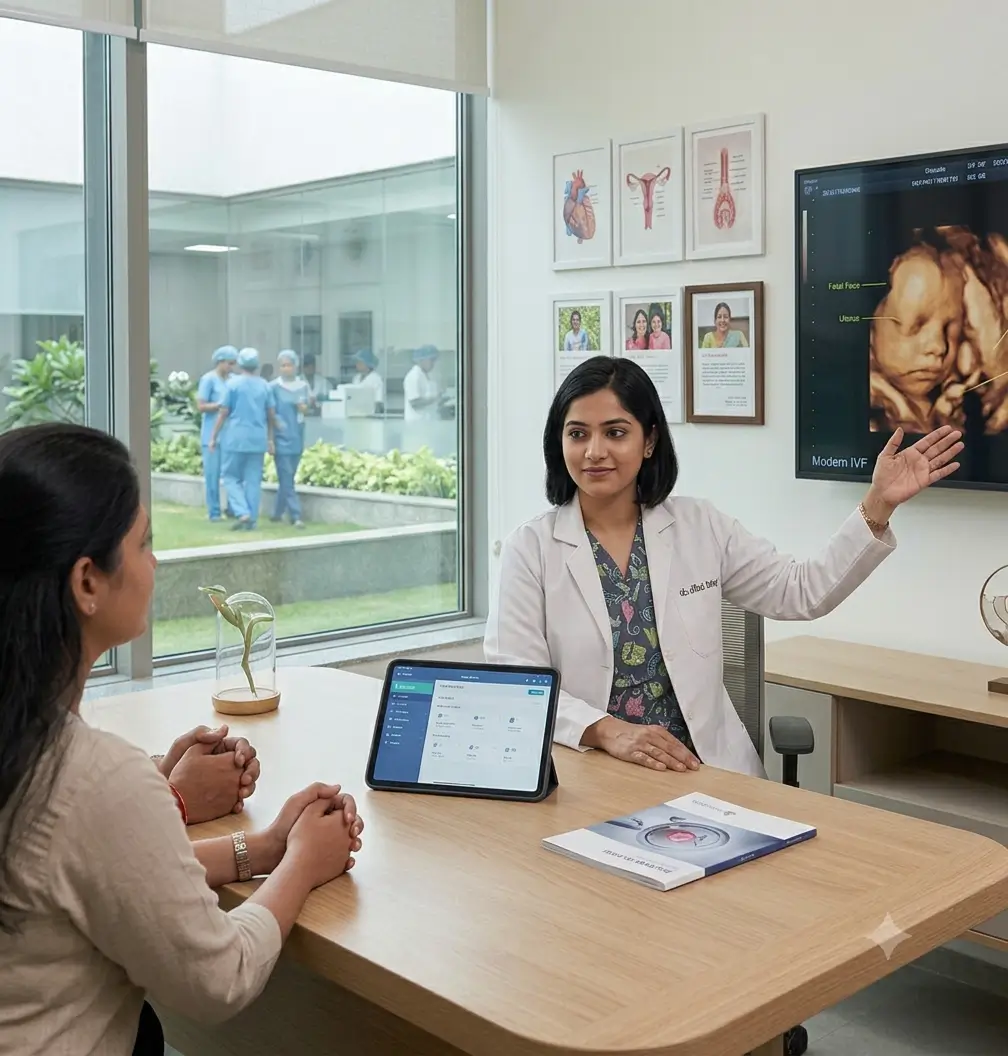
Why Consult an IVF Doctor in Noida Sector - 4?
Many couples assume IVF is the first solution when pregnancy does not happen quickly. In reality, IVF is only one of several fertility treatments available. A fertility specialist first determines why conception has not occurred and then recommends the treatment most likely to benefit the couple.
A fertility consultation is generally advisable if:
- You are under 35 and have been trying to conceive for over one year.
- You are above 35 and have been trying for six months or longer.
- Your menstrual cycles are irregular or absent.
- You have experienced recurrent miscarriages.
- You have been diagnosed with PCOS or endometriosis.
- You have undergone unsuccessful fertility treatments.
- A semen analysis has identified male infertility.
- You wish to preserve fertility before cancer treatment or delaying pregnancy.
Early assessment often identifies conditions that can be treated before IVF becomes necessary. In many cases, correcting ovulation disorders, treating hormonal imbalances, or addressing male fertility factors may improve the chances of natural conception or allow couples to benefit from less complex assisted reproductive treatments.
Meet Dr. Shipra Singla
Patients searching for an IVF Specialist in Noida Sector - 4 often look beyond qualifications alone. They want a doctor who listens carefully, explains treatment options clearly, and develops a plan that reflects their medical history and family-building goals.
Dr. Shipra Singla serves as the Director – Fertility & IVF Department at Cloudnine Hospitals Delhi & Noida. She has extensive experience managing routine as well as medically complex infertility cases.
Her academic background includes:
- Gold Medallist in MS (Obstetrics & Gynaecology) from CMC, Ludhiana
- Advanced Fellowship in Reproductive Medicine
- Fellowship in Laparoscopy & Robotic Surgery
Her clinical work is supported by active involvement in reproductive medicine research, particularly in:
- Implantation failure
- Recurrent IVF failure
- Improving IVF outcomes
- Optimising the timing of fertility interventions
Dr. Shipra Singla is also a member of respected professional organisations, including:
- European Society of Human Reproduction and Embryology (ESHRE)
- American Society for Reproductive Medicine (ASRM)
- Indian Fertility Society (IFS)
- Indian Society of Assisted Reproduction (ISAR)
- Association of Obstetricians & Gynaecologists (AOGD–FOGSI)
These affiliations reflect her continued engagement with current clinical evidence and developments in reproductive medicine.
Conditions Commonly Evaluated by a Fertility Doctor in Noida Sector - 4
Infertility is not a single disease. It is a medical condition with multiple possible causes, and successful treatment begins with understanding those causes.
Polycystic Ovary Syndrome (PCOS)
PCOS is one of the most common reasons for irregular ovulation. Women with PCOS may experience irregular menstrual cycles, acne, unwanted facial hair, or difficulty conceiving.
Not every woman with PCOS requires IVF. Many achieve pregnancy after improving ovulation through lifestyle measures, medication, or carefully monitored fertility treatment. Identifying the severity of the condition is an important first step.
Endometriosis
Endometriosis occurs when tissue similar to the lining of the uterus grows outside it. This may lead to pelvic pain, painful periods, inflammation, and reduced fertility.
Treatment depends on several factors, including the woman's age, ovarian reserve, symptom severity, and previous attempts to conceive. Some patients benefit from surgery, while others may be advised to proceed with assisted reproductive technology.
Poor Ovarian Reserve
A reduced ovarian reserve means the number or quality of remaining eggs is lower than expected for age. This does not necessarily mean pregnancy is impossible, but it may influence treatment recommendations and timing.
Simple blood tests and ultrasound scans help estimate ovarian reserve and guide treatment planning.
Advanced Maternal Age
Female fertility gradually declines with age, especially after 35 years. Egg quality becomes an increasingly important factor affecting conception, miscarriage risk, and IVF outcomes.
Seeking timely fertility evaluation allows couples to understand their options before further age-related decline occurs.
Male Infertility
Around half of infertility cases involve a male factor, either alone or alongside female infertility. Despite this, male fertility assessment is sometimes delayed.
A semen analysis provides valuable information about sperm count, movement, and shape. When required, treatments such as ICSI can improve fertilisation by injecting a single healthy sperm directly into an egg.
Recurrent IVF Failure and Implantation Failure
Some couples experience repeated unsuccessful IVF cycles despite transferring good-quality embryos. In such situations, a detailed review of previous treatment, embryo development, uterine health, hormonal factors, and overall reproductive health may reveal opportunities to modify future treatment.
Rather than repeating identical protocols, careful reassessment often provides clearer direction for subsequent cycles.
Fertility Treatments Available
As an experienced Fertility Specialist in Noida Sector - 4, Dr. Shipra Singla offers a range of fertility treatments based on individual diagnosis and reproductive goals.
Intrauterine Insemination (IUI)
IUI involves placing specially prepared sperm directly inside the uterus around the time of ovulation. It may be recommended for selected cases of mild male infertility, unexplained infertility, ovulation disorders, or when donor sperm is being used.
The procedure is relatively straightforward and usually performed without anaesthesia.
In Vitro Fertilisation (IVF)
IVF involves stimulating the ovaries to produce multiple eggs, retrieving mature eggs, fertilising them in a specialised laboratory, and transferring an embryo into the uterus.
Although IVF is one of the most recognised infertility treatments, it is recommended only after considering the couple's age, diagnosis, ovarian reserve, previous treatment history, and overall reproductive health.
Intracytoplasmic Sperm Injection (ICSI)
ICSI is an advanced laboratory technique used during IVF. Instead of allowing sperm to fertilise an egg naturally in the laboratory, a single selected sperm is injected directly into the egg.
ICSI is commonly recommended for significant male infertility, previous fertilisation failure, or specific laboratory indications.
Egg Freezing
Egg freezing, also known as oocyte cryopreservation, allows women to preserve unfertilised eggs for future use.
This option may be appropriate for women planning pregnancy later in life or those requiring medical treatments, such as chemotherapy, that could affect future fertility.
Embryo Freezing
Embryo freezing allows embryos created during IVF to be stored for future transfer. This may reduce the need for repeated ovarian stimulation in later treatment cycles and provides additional reproductive options depending on individual circumstances.
Fertility-Enhancing Hysteroscopy and Laparoscopy
Some fertility problems are linked to structural conditions inside the uterus or pelvis. Minimally invasive procedures such as hysteroscopy and laparoscopy can help diagnose and treat issues including uterine polyps, fibroids, adhesions, endometriosis, or tubal disease when clinically appropriate.
Why Personalised Fertility Care Matters
Every fertility diagnosis is different. Two couples of the same age may require completely different treatment plans because infertility can have multiple underlying causes.
Dr. Shipra Singla believes treatment decisions should be based on detailed fertility evaluation rather than assumptions. Factors such as age, ovarian reserve, previous pregnancies, hormonal profile, semen analysis, ultrasound findings, lifestyle, medical conditions, and reproductive goals all influence clinical recommendations.
This individualised approach also helps avoid unnecessary procedures. For some couples, relatively simple treatments may be sufficient. Others may benefit from moving directly to IVF or ICSI based on their medical findings. The objective is to recommend the most appropriate treatment at the right time while ensuring patients understand every available option and can make informed decisions with confidence.
Your First Fertility Consultation: What to Expect
Meeting an infertility specialist for the first time can feel overwhelming, especially if you have already spent months or years trying to conceive. Many couples worry that they will be advised to start IVF immediately. In reality, the first consultation is focused on understanding your medical history and identifying the factors affecting fertility.
During your appointment, Dr. Shipra Singla takes time to discuss:
- How long you have been trying to conceive
- Menstrual cycle pattern and ovulation history
- Previous pregnancies or miscarriages
- Existing medical conditions and medications
- Earlier fertility treatments, if any
- Lifestyle factors that may influence reproductive health
- The male partner's medical and reproductive history
A fertility evaluation may include blood tests to assess hormone levels, an ultrasound scan to examine the ovaries and uterus, ovarian reserve testing, and a semen analysis for the male partner. Additional investigations are recommended only when clinically indicated.
Once the evaluation is complete, the findings are explained in clear, easy-to-understand language. Patients are encouraged to ask questions and discuss their concerns before any treatment plan is finalised. This collaborative approach helps couples understand why a particular recommendation has been made and what outcomes they can realistically expect.
Understanding the IVF Process Step by Step
Many people know the term IVF but are unsure what actually happens during treatment. Learning about each stage can make the process less intimidating.
Step 1: Ovarian Stimulation
Special medications are prescribed to encourage the ovaries to produce multiple mature eggs instead of the single egg released during a natural menstrual cycle. Ultrasound scans and blood tests help monitor the response and determine the ideal time for the next stage.
Step 2: Egg Retrieval
Once the follicles have matured, the eggs are collected through a short procedure performed under sedation. Using ultrasound guidance, a fine needle is passed through the vaginal wall to retrieve the eggs from the ovaries.
Most patients return home the same day after a brief period of observation.
Step 3: Fertilisation
The collected eggs are combined with sperm in the embryology laboratory. Depending on the clinical situation, fertilisation occurs through conventional IVF or with ICSI, where a single healthy sperm is injected directly into an egg.
The embryos are then carefully monitored as they develop over the following days.
Step 4: Embryo Development
Embryologists observe embryo growth and quality before selecting the most suitable embryo for transfer. In some situations, embryos may be frozen for transfer in a later cycle if that approach is considered more appropriate.
Step 5: Embryo Transfer
Embryo transfer is a relatively simple procedure that usually does not require anaesthesia. The selected embryo is gently placed inside the uterus using a thin catheter.
Patients can usually resume most routine activities shortly afterwards, although individual advice may vary depending on their treatment plan.
Step 6: Pregnancy Test
About two weeks after embryo transfer, a blood test is performed to determine whether implantation has occurred.
It is important to remember that IVF outcomes depend on several factors, including age, egg quality, sperm quality, embryo development, uterine health, and the underlying cause of infertility. No fertility treatment can guarantee pregnancy, which is why realistic counselling forms an important part of care.
Why Patients Looking for an IVF Doctor in Noida Sector - 4 Choose Dr. Shipra Singla
Choosing an IVF Doctor in Noida Sector - 4 is about more than selecting a treatment. Patients often look for a specialist who combines clinical expertise with clear communication and evidence-based decision-making.
Several aspects of Dr. Shipra Singla's practice are valued by patients seeking fertility care:
- Individual treatment plans based on detailed fertility evaluation rather than a standard protocol.
- Experience managing both straightforward and medically complex infertility cases.
- Expertise in IVF, ICSI, IUI, fertility-enhancing hysteroscopy, laparoscopy, egg freezing, and oncofertility.
- Continued involvement in reproductive medicine research, particularly recurrent IVF failure and implantation failure.
- A commitment to explaining investigations and treatment options in simple, understandable language.
- Collaboration with embryologists and multidisciplinary teams whenever required to optimise treatment planning.
Rather than focusing only on procedures, consultations also consider lifestyle, reproductive goals, age, previous treatment history, and overall health before recommending the next step.
Serving Patients in and Around Noida Sector - 4
Patients looking for an IVF Specialist in Noida Sector - 4 often prefer a conveniently located fertility clinic, making it easier to attend consultations, monitoring visits, and follow-up appointments throughout treatment.
Dr. Shipra Singla provides fertility care for patients from Noida Sector 4 and nearby locations, including:
- Noida Sector 1, 2, 3, 5, 6, 15, 16, 18, 22, 27, 37, 62, and 63
- Greater Noida
- Indirapuram
- Vasundhara
- Mayur Vihar
- East Delhi
Easy accessibility can support timely investigations and regular monitoring, helping patients stay on track with their personalised fertility treatment plan.
Practical Fertility Tips from a Reproductive Medicine Specialist
While medical treatment is sometimes necessary, healthy habits can support reproductive health and prepare couples for treatment.
Some practical recommendations include:
- Do not delay fertility evaluation if pregnancy has not occurred within the recommended time frame.
- Both partners should undergo fertility assessment instead of assuming the problem affects only one person.
- Maintain a healthy body weight, as both obesity and being underweight can influence fertility.
- Avoid smoking and limit alcohol consumption, as both may affect egg and sperm quality.
- Manage chronic conditions such as diabetes or thyroid disorders with appropriate medical care.
- Follow prescribed medications carefully and avoid unverified supplements without discussing them with your doctor.
These measures cannot replace medical treatment when infertility is present, but they may contribute to better overall reproductive health.
Common Mistakes That Can Delay Fertility Treatment
Several misconceptions may prevent couples from seeking timely care.
One common mistake is waiting too long before consulting a fertility doctor, particularly when the woman is over 35 years of age. Female fertility naturally declines with age, making early assessment increasingly important.
Another misconception is believing infertility is always related to the woman. Male infertility contributes to a significant proportion of cases, making semen analysis an essential part of evaluation.
Some couples also repeat unsuccessful treatments without reviewing why previous attempts failed. A second opinion and careful reassessment may identify factors that require a different treatment strategy rather than simply repeating the same protocol.
Finally, relying solely on information found online can create unnecessary anxiety. Every fertility case is unique, and treatment decisions should always be based on an individual medical evaluation.
Conclusion
Choosing a Fertility Doctor in Noida Sector - 4 involves finding someone who will carefully evaluate your medical history, explain available treatment options, and recommend a plan based on clinical evidence rather than assumptions.
With advanced training in reproductive medicine, expertise across a broad range of fertility treatments, and ongoing involvement in research, Dr. Shipra Singla provides personalised care for couples experiencing infertility, women with PCOS or endometriosis, patients with poor ovarian reserve, individuals considering egg freezing, couples facing recurrent IVF failure, and those seeking a second opinion.
If you are planning your first fertility consultation or wish to discuss previous treatment outcomes, scheduling an appointment can help you gain a clearer understanding of your reproductive health and the treatment options that may be appropriate for your situation.
Meet Our IVF Doctor in Noida/Delhi – Dr. Shipra Singla

Dr. Shipra Singla
MBBS, MS (Obs & Gynae),
Fellowship in Reproductive Medicine
Senior Fertility & IVF Specialist
Dr. Shipra Singla is the Director of the Fertility & IVF Department at Cloudnine Hospitals Delhi & Noida. She is an expert professional with an excellent academic background. She is a gold medallist in MS (Gynaecologist) from CMC, Ludhiana and has pursued advanced fellowships in Reproductive Medicine and Laparoscopy & Robotic Surgery.
Dr. Shipra Singla is well-regarded for her expertise in diagnosing and treating patients of PCOS, endometriosis, advanced age, poor ovarian reserve, recurrent IVF failures & male infertility. She is a dedicated fertility expert and provides personalised service to maximise patient outcomes and satisfaction. Her patient-centric approach ensures that each couple receives comprehensive fertility care tailored to their specific needs.
Her focus areas include IUI, IVF, ICSI, oocyte cryopreservation, oncofertility, fertility-enhancing hysteroscopy & laparoscopy surgeries. Dr. Shipra is actively engaged in research in the field of reproductive medicine & has participated successfully in various conferences & workshops as a faculty.
Dr. Shipra’s research focuses on how the timing of various fertility interventions may affect the outcomes and how to improve success rates in patients who have repeated IVF/implantation failure.
- European Society of Human Reproduction and Embryology (ESHRE)
- American Society for Reproductive Medicine (ASRM)
- Indian Fertility Society (IFS)
- Indian Society of Assisted Reproduction (ISAR)
- Association of Obstetricians & Gynaecologists (AOGD-FOGSI)
Best IVF Specialist in Delhi/Noida
Get affordable and transparent IVF treatment in Delhi/Noida with personalized care and advanced fertility solutions.
Frequently Asked Questions
If you are under 35 and have been trying to conceive for one year, or over 35 and have been trying for six months without success, it is advisable to seek a fertility evaluation sooner rather than later.
No. Many couples benefit from simpler treatments such as ovulation induction or IUI. IVF is recommended only when it is medically appropriate.
Yes. Many women with PCOS conceive after improving ovulation through lifestyle changes, medication, or less complex fertility treatments, depending on their individual diagnosis.
Not always. The choice between IVF, ICSI, or other treatments depends on the severity and cause of male infertility identified during evaluation.
Ovarian reserve testing estimates the quantity of remaining eggs using blood tests and ultrasound. It helps guide fertility treatment planning but does not predict pregnancy with certainty.
No. Some women choose egg freezing to preserve fertility before age-related decline, while others do so before treatments that may affect ovarian function.
A typical IVF cycle generally takes about two to three weeks from ovarian stimulation to embryo transfer, although the exact timeline varies depending on the treatment plan.
Yes. Fertility evaluation is most effective when both partners participate, allowing female and male reproductive factors to be assessed together.
Yes. Reviewing previous investigations, laboratory findings, embryo development, and treatment protocols may help identify opportunities to refine future treatment plans.
You can schedule a consultation through a phone call to discuss your fertility concerns, undergo an appropriate evaluation, and receive personalised recommendations based on your medical history and reproductive goals.
Request a Callback
Error: Contact form not found.