
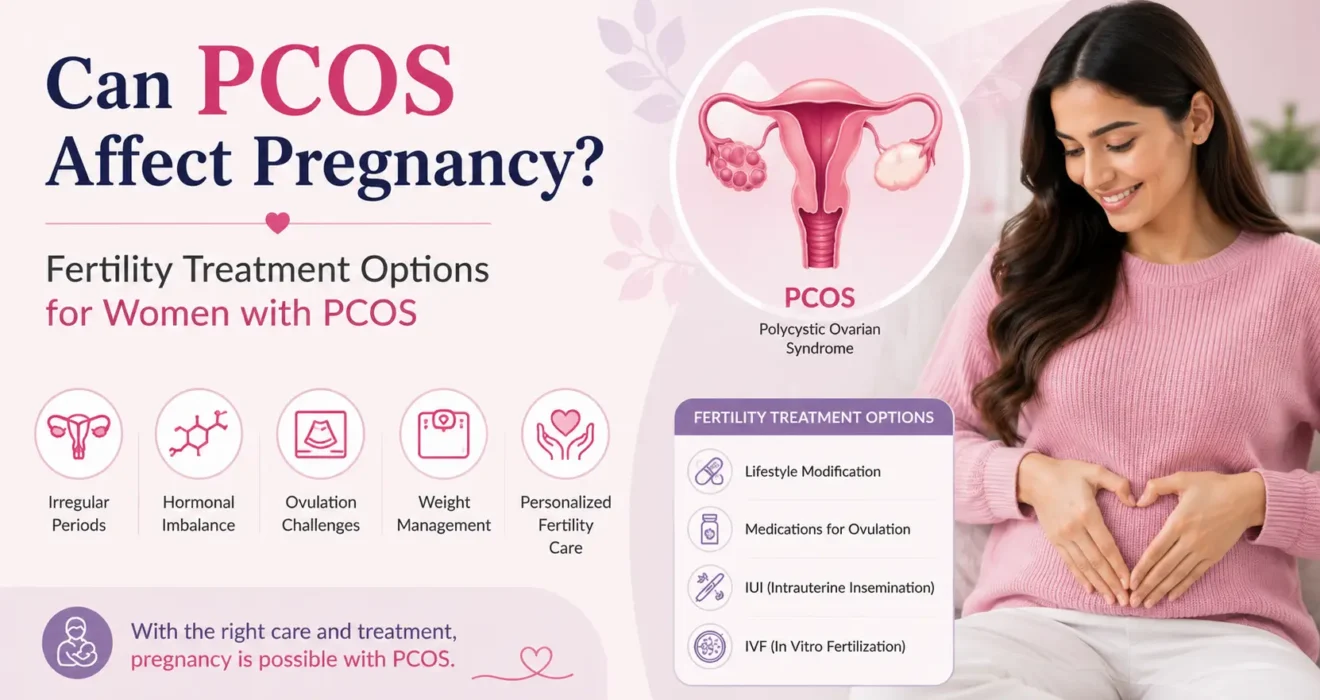
Can PCOS Affect Pregnancy? Fertility Treatment Options for Women with PCOS
If you’ve been diagnosed with Polycystic Ovary Syndrome (PCOS) and are trying to conceive, you’re not alone. PCOS is one of the most common causes of female infertility, affecting millions of women worldwide. While PCOS can make it more challenging to get pregnant, many women with PCOS successfully conceive naturally or with the help of fertility treatments.
Understanding how PCOS affects fertility and knowing the available treatment options can help you take the right steps toward achieving a healthy pregnancy.
What Is PCOS?
PCOS, or Polycystic Ovary Syndrome, is a hormonal condition that affects how the ovaries function. Women with PCOS often experience irregular ovulation or may not ovulate regularly at all, making it difficult to conceive.
Common symptoms of PCOS include:
Irregular or missed periods
Weight gain
Acne
Excess facial or body hair
Hair thinning
Difficulty getting pregnant
Not every woman with PCOS experiences the same symptoms, which is why proper diagnosis and individualized treatment are important.
How Does PCOS Affect Fertility?
Pregnancy occurs when a healthy egg is released from the ovary and fertilized by sperm. In women with PCOS, hormonal imbalances can interfere with regular ovulation.
When ovulation does not occur consistently:
Fewer eggs are released
Menstrual cycles become irregular
Conception becomes more difficult
Additionally, insulin resistance, which is common in PCOS, can further affect hormone levels and reproductive health.
Can Women with PCOS Get Pregnant Naturally?
Yes. Many women with PCOS conceive naturally.
However, some may take longer to become pregnant due to irregular ovulation. Factors such as age, weight, overall health, and the severity of PCOS can influence fertility outcomes.
Making healthy lifestyle changes often improves ovulation and increases the chances of natural conception.
Signs That PCOS May Be Affecting Your Fertility
You should consider consulting a fertility specialist if you have:
Irregular menstrual cycles
Difficulty tracking ovulation
Been trying to conceive for over a year
Been trying for over six months if you are over 35
A previous diagnosis of PCOS
Recurrent miscarriages
Early fertility evaluation can help identify the most effective treatment approach.
Fertility Treatment Options for Women with PCOS
1. Lifestyle Modifications
For many women, lifestyle changes are the first step in managing PCOS and improving fertility.
Healthy habits include:
Maintaining a healthy weight
Following a balanced diet
Exercising regularly
Managing stress
Getting adequate sleep
Even modest weight loss can improve ovulation and increase the chances of pregnancy.
2. Ovulation Induction
If ovulation is irregular, fertility medications may be prescribed to stimulate egg release.
These medications help regulate ovulation and increase the likelihood of conception. Ovulation induction is often one of the first fertility treatments recommended for women with PCOS.
3. Intrauterine Insemination (IUI)
IUI treatment may be recommended when ovulation has been successfully induced but pregnancy has not occurred naturally.
During IUI:
Ovulation is carefully monitored.
A prepared sperm sample is placed directly into the uterus.
Fertilization occurs naturally inside the body.
IUI can be an effective option for selected women with PCOS.
4. IVF Treatment
IVF (In Vitro Fertilization) is one of the most successful fertility treatments for women with PCOS, especially when other treatments have not worked.
During IVF:
Multiple eggs are collected from the ovaries.
Fertilization takes place in a laboratory.
Healthy embryos are transferred into the uterus.
IVF provides greater control over the fertilization process and often offers higher success rates for suitable candidates.
Why IVF Can Be Effective for PCOS Patients
Women with PCOS often produce a good number of eggs during ovarian stimulation. With careful monitoring by an experienced fertility specialist, IVF can help maximize the chances of a successful pregnancy while minimizing treatment risks.
Modern IVF protocols are specifically designed to ensure safety and optimize outcomes for women with PCOS.
Can PCOS Increase Pregnancy Risks?
Women with PCOS may have a slightly higher risk of certain pregnancy complications, including:
Gestational diabetes
High blood pressure
Pregnancy-related complications
However, with proper medical care, monitoring, and healthy lifestyle choices, most women with PCOS go on to have healthy pregnancies and healthy babies.
How to Improve Fertility with PCOS
If you have PCOS and are planning a pregnancy, consider the following:
Maintain a healthy body weight.
Eat a nutrient-rich diet.
Stay physically active.
Manage stress levels.
Follow your doctor’s treatment plan.
Seek fertility advice early if pregnancy is delayed.
Small changes can make a significant difference in reproductive health and fertility outcomes.
When Should You See a Fertility Specialist?
You should seek expert fertility care if:
Your periods are highly irregular.
You have been diagnosed with PCOS.
You are struggling to conceive.
You have experienced failed fertility treatments.
You are over 35 and trying to get pregnant.
A fertility specialist can assess your hormone levels, ovarian reserve, and overall reproductive health to create a personalized treatment plan.
Final Thoughts
PCOS can make conception more challenging, but it does not mean pregnancy is impossible. With the right diagnosis, lifestyle modifications, and fertility treatment options, many women with PCOS successfully achieve their dream of parenthood.
Whether you are just starting your fertility journey or have been trying for some time, early guidance from an experienced fertility specialist can help you understand your options and improve your chances of a healthy pregnancy. Every fertility journey is unique, and with the right support, hope is always within reach.