
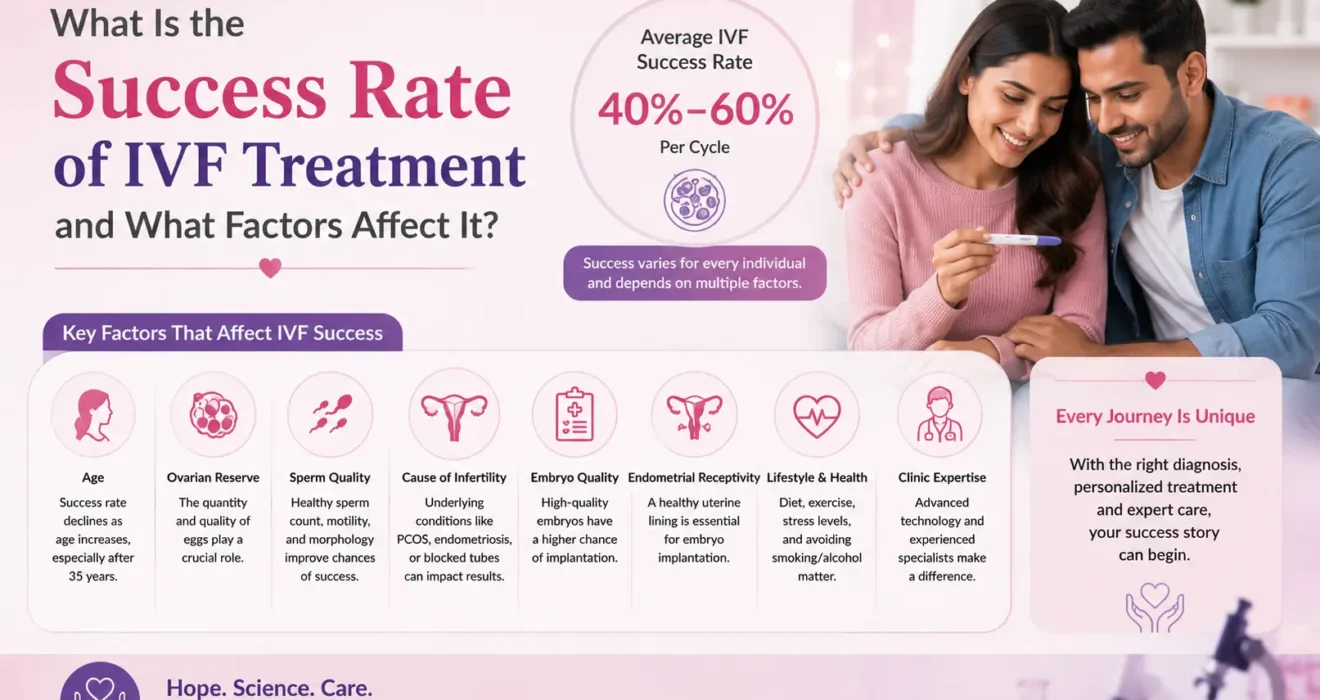
What Is the Success Rate of IVF Treatment and What Factors Affect It?
One of the most common questions couples ask before starting fertility treatment is, “What is the success rate of IVF?” While IVF has helped millions of couples achieve parenthood, the reality is that success rates can vary from person to person. Understanding the factors that influence IVF success can help set realistic expectations and empower you to make informed decisions about your fertility journey.
Understanding IVF Success Rates
IVF success rate refers to the likelihood of achieving a pregnancy and delivering a healthy baby through an IVF cycle. Advances in reproductive medicine, embryo culture techniques, genetic testing, and laboratory technology have significantly improved IVF outcomes over the years.
However, there is no single success rate that applies to everyone. Every couple’s fertility journey is unique, and several factors play an important role in determining treatment outcomes.
Age Is One of the Most Important Factors
A woman’s age has a significant impact on fertility and IVF success.
As women age, both the quantity and quality of eggs naturally decline. Younger women generally have higher IVF success rates because their eggs are more likely to develop into healthy embryos.
While IVF can help overcome many fertility challenges, age remains one of the strongest predictors of treatment success.
Egg Quality and Ovarian Reserve
Healthy eggs are essential for creating healthy embryos.
Women with a good ovarian reserve often respond better to fertility medications and may produce more eggs during IVF treatment. On the other hand, women with diminished ovarian reserve may require a more personalized treatment approach.
Fertility specialists often evaluate ovarian reserve through blood tests and ultrasound scans before creating a treatment plan.
Sperm Health Matters Too
Fertility is not only a female concern. Male infertility contributes to a significant percentage of infertility cases.
Factors such as low sperm count, poor sperm motility, and abnormal sperm morphology can affect fertilization and embryo development. Advanced techniques like ICSI (Intracytoplasmic Sperm Injection) can help improve fertilization rates in many male infertility cases.
Embryo Quality Influences Outcomes
Embryo quality is one of the most critical factors affecting IVF success.
After fertilization, embryologists carefully monitor embryo development and select the healthiest embryos for transfer. High-quality embryos have a better chance of implanting successfully and leading to a healthy pregnancy.
Uterine Health and Implantation
Even when high-quality embryos are available, successful implantation depends on a healthy uterine environment.
Conditions such as:
Uterine fibroids
Endometrial polyps
Thin endometrium
Endometriosis
Adhesions inside the uterus
may affect implantation and pregnancy outcomes. Identifying and treating these issues before IVF can improve success rates.
Lifestyle Factors Can Impact IVF Success
Your daily habits can influence fertility and treatment outcomes.
Lifestyle factors that may affect IVF success include:
Smoking
Excessive alcohol consumption
Obesity
Chronic stress
Poor nutrition
Lack of physical activity
Maintaining a healthy lifestyle before and during IVF treatment can support reproductive health and improve overall outcomes.
Previous IVF History
Couples who have experienced recurrent IVF failures often require a more detailed evaluation.
Advanced investigations may help identify underlying factors such as:
Genetic abnormalities
Implantation issues
Egg quality concerns
Sperm DNA fragmentation
Immune-related factors
A personalized treatment strategy can often improve the chances of success in future cycles.
Can IVF Success Rates Be Improved?
While no fertility specialist can guarantee pregnancy, several steps may help optimize outcomes:
Choose an Experienced Fertility Specialist
A skilled fertility expert can identify underlying fertility issues and create a treatment plan tailored to your specific needs.
Follow Your Treatment Protocol Carefully
Taking medications exactly as prescribed and attending monitoring appointments is essential for achieving the best possible results.
Focus on Overall Health
Maintaining a healthy weight, eating a balanced diet, staying active, and managing stress can positively influence fertility.
Address Underlying Conditions
Treating conditions such as PCOS, endometriosis, thyroid disorders, or male infertility before IVF can improve treatment outcomes.
Why Personalized Fertility Care Matters
Every couple’s fertility journey is different. What works for one patient may not be suitable for another. This is why personalized fertility care is essential.
A comprehensive evaluation allows fertility specialists to identify challenges, recommend the most appropriate treatment, and maximize the chances of success.
Final Thoughts
IVF has brought hope and happiness to countless families around the world. While success rates depend on factors such as age, egg quality, sperm health, embryo quality, and overall reproductive health, advancements in fertility treatment continue to improve outcomes every year.
If you are considering IVF treatment, consulting an experienced fertility specialist can help you better understand your fertility potential and create a personalized plan to achieve your dream of parenthood. The right guidance, advanced treatment options, and timely intervention can make a meaningful difference in your fertility journey.