
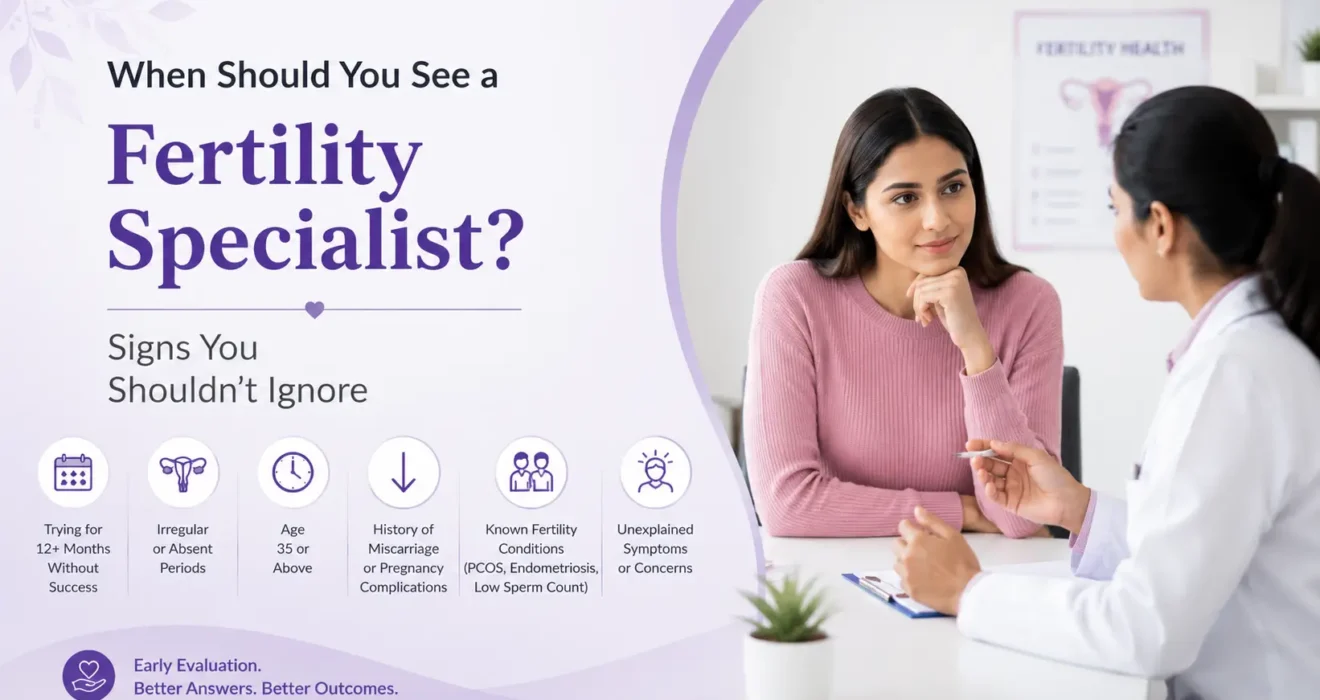
When Should You See a Fertility Specialist? Signs You Shouldn’t Ignore
For many couples, getting pregnant happens naturally within a few months of trying. However, when pregnancy doesn’t occur as expected, it can lead to worry, frustration, and uncertainty. While occasional delays are normal, there are certain signs that may indicate it’s time to seek help from a fertility specialist.
The sooner fertility concerns are identified, the more treatment options may be available. Early evaluation can help uncover underlying issues and improve the chances of achieving a healthy pregnancy.
How Long Should You Try Before Seeking Help?
A common question couples ask is, “When should we consult a fertility doctor?”
General guidelines suggest:
If you are under 35 years old and have been trying to conceive for 12 months without success, it’s time to seek professional advice.
If you are over 35 years old, you should consult a fertility specialist after 6 months of trying.
Women over 40 should consider seeking fertility guidance as soon as they begin planning a pregnancy.
Age plays an important role in fertility, and early intervention can often improve treatment outcomes.
1. Irregular or Missed Periods
Regular menstrual cycles usually indicate regular ovulation.
If your periods are:
Irregular
Very infrequent
Extremely heavy
Frequently missed
it could signal an ovulation problem.
Conditions such as PCOS, thyroid disorders, or hormonal imbalances may affect fertility and should be evaluated by a specialist.
2. You Have Been Trying Without Success
If you’ve been having regular unprotected intercourse and pregnancy has not occurred within the recommended timeframe, a fertility assessment can help determine the cause.
Infertility is more common than many people realize, and both male and female factors can contribute to difficulties in conceiving.
3. You Have PCOS
Polycystic Ovary Syndrome (PCOS) is one of the most common causes of female infertility.
Women with PCOS often experience:
Irregular ovulation
Hormonal imbalances
Difficulty conceiving
A fertility specialist can recommend treatments that help regulate ovulation and improve pregnancy chances.
4. You Have Endometriosis
Endometriosis can affect fertility by causing inflammation, scarring, and damage to reproductive organs.
Symptoms may include:
Painful periods
Pelvic pain
Pain during intercourse
Difficulty getting pregnant
Early diagnosis and treatment can significantly improve fertility outcomes.
5. You Have Experienced Multiple Miscarriages
While miscarriages are unfortunately common, repeated pregnancy loss may indicate an underlying fertility issue.
Potential causes include:
Hormonal disorders
Genetic abnormalities
Uterine abnormalities
Immune-related conditions
A fertility specialist can perform detailed investigations to identify possible causes and recommend appropriate treatment.
6. Male Fertility Concerns
Fertility challenges are not always related to female reproductive health.
Men should consider evaluation if they have:
Low sperm count
Poor sperm motility
Erectile dysfunction
Previous testicular surgery
History of infections affecting fertility
A simple semen analysis can provide valuable insights into male reproductive health.
7. You Are Over 35 and Planning Pregnancy
Female fertility naturally declines with age, especially after 35.
As age increases:
Egg quality decreases
Ovarian reserve declines
Pregnancy rates may reduce
Seeking fertility advice early can help couples understand their options and avoid unnecessary delays.
8. Previous Failed Fertility Treatments
If you have undergone:
Multiple unsuccessful IUI cycles
Failed IVF treatment
Recurrent IVF failures
it may be beneficial to consult a fertility specialist for a comprehensive review of your treatment history.
Sometimes a fresh perspective or personalized treatment strategy can improve future outcomes.
9. Known Medical Conditions Affecting Fertility
Certain health conditions can impact reproductive health, including:
PCOS
Endometriosis
Thyroid disorders
Diabetes
Autoimmune conditions
Low ovarian reserve
Managing these conditions effectively can enhance fertility and increase the chances of pregnancy.
10. You Want to Preserve Future Fertility
Not every visit to a fertility specialist is due to infertility.
Many women choose fertility preservation options such as Egg Freezing when:
Delaying pregnancy for personal reasons
Focusing on career goals
Preparing for medical treatments that may affect fertility
Understanding your fertility potential early allows you to make informed decisions about future family planning.
What Happens During a Fertility Consultation?
Your first fertility consultation is designed to understand your medical history and reproductive health.
The evaluation may include:
Detailed medical history review
Hormonal testing
Ultrasound examination
Ovarian reserve assessment
Semen analysis
Fertility counseling
Based on the findings, your fertility specialist will recommend the most suitable treatment plan.
Why Early Fertility Evaluation Matters
Many couples delay seeking help because they assume more time is needed. However, fertility conditions often become easier to manage when diagnosed early.
Benefits of early evaluation include:
Faster diagnosis
More treatment options
Improved success rates
Better fertility preservation opportunities
Reduced emotional stress
Seeking advice early doesn’t mean you need treatment immediately. It simply provides clarity and helps you make informed decisions.
Final Thoughts
If you’ve been struggling to conceive, have irregular cycles, experienced miscarriages, or have a known fertility condition, don’t ignore the signs. Fertility challenges are common, and modern reproductive medicine offers effective solutions for many couples.
Consulting a fertility specialist at the right time can provide answers, reassurance, and a personalized roadmap toward parenthood. The earlier you seek guidance, the greater the opportunity to understand your fertility health and explore the best options for building your family.